Side Dishes
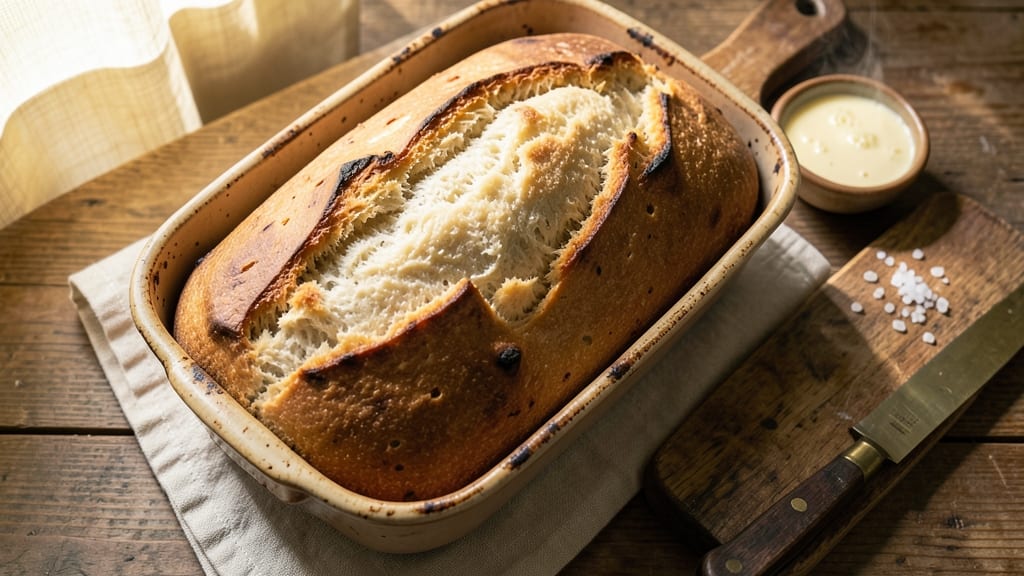
This Amish friendship white bread recipe brings warmth and tradition to your kitchen with its signature sweet swirls and crusty exterior—just like the loaves shared among Amish communities for generations.
The hand-kneaded dough and slow rise create a tender crumb that's impossible to resist, while the cinnamon-sugar swirl adds a touch of homestyle sweetness without overpowering the bread's natural flavor.
I've perfected this recipe through years of baking, ensuring every loaf turns out perfectly golden with a crispy crust that's worth the wait.
The beauty of Amish friendship bread lies in its simplicity and tradition—no fancy equipment or complicated techniques, just time-honored methods passed down through families. You'll work with basic ingredients like flour, sugar, and yeast, but the magic happens in the slow fermentation and careful shaping.
This recipe delivers restaurant-quality results at home, with a texture that's both tender and sturdy enough to hold those sweet swirls beautifully. The aroma alone will fill your kitchen with comfort, making it perfect for sharing with friends or saving for special occasions.
What makes this bread truly special is its cultural significance—originally baked by Amish women as gifts for neighbors or to raise funds for community projects. Each loaf carries a story, and now you can bring that tradition into your own home.
The crusty exterior contrasts perfectly with the soft, slightly sweet interior, while the cinnamon-sugar swirl adds a subtle sweetness that pairs wonderfully with butter or jam.
Whether you're baking for a gathering or treating yourself to a homemade loaf, this recipe delivers the kind of bread that feels like a hug in every bite.
Ready in about 2 hours (including rising time), this recipe is designed to fit seamlessly into your schedule without sacrificing quality. The hands-on process is rewarding, and the results are worth every minute.
Let's get started on creating your own batch of this beloved community bread—where tradition meets deliciousness in every slice.
Ingredients for amish friendship white bread
Five cups flour, a pinch of yeast, and cinnamon-sugar swirls—this recipe delivers restaurant-quality bread with tradition in every bite.
| Ingredient | Amount | Notes |
|---|---|---|
| All-Purpose Flour 🌾 | 5 cups | Plus extra for dusting |
| Granulated Sugar 🍚 | ¼ cup | White or light brown |
| Active Dry Yeast 🍞 | 2 ¼ tsp | One packet or 1/4 oz |
| Unsalted Butter 🧈 | ½ cup | Cold, cubed for dough |
| Large Eggs 🥚 | 1 whole | Room temperature preferred |
| Warm Water 💧 | 1 cup | 110°F for yeast activation |
| Salt 🧂 | 1 tsp | Diamond Crystal preferred |
| Cinnamon 🌿 | 1 ½ tbsp | Ground, not cassia |
| Granulated Sugar 🍚 | ½ cup | For cinnamon swirl |
| Milk 🥛 | 2 tbsp | For brushing crust |
The yeast is the heart of this bread—Bob's Red Mill or Saf-Instant work best for reliability. If your yeast is old, test it first (proof in warm water for 5-10 minutes). The flour matters too—King Arthur or Gold Medal give that perfect crumb. For the cinnamon swirl, McCormick ground cinnamon is my go-to, but any high-quality brand works. Butter should be cold but not rock-hard—press a cube with your finger, it should dent slightly. Store flour in airtight containers to prevent rancidity, and keep yeast in the freezer for longer shelf life.
No yeast on hand? Instant yeast at the same amount works just fine. Short on milk for brushing? Heavy cream or water does the job, though milk adds that golden sheen. The cinnamon-sugar mix can be prepped ahead—just keep it in a sealed container. For a richer dough, replace 2 tbsp of the all-purpose flour with bread flour. If your kitchen's too warm, chill the dough for 30 minutes before shaping. And if you're feeling adventurous, add a pinch of nutmeg to the swirl for extra depth.
This dough needs time—at least 1 hour for the first rise, then another hour after shaping. Store shaped loaves in the fridge overnight for even better flavor. The finished bread keeps well at room temperature for 3-4 days, wrapped in a clean kitchen towel. For longer storage, freeze slices between parchment paper—they'll reheat beautifully in a toaster or oven. The swirls stay freshest when the bread is slightly warm, so plan ahead if you're making this for company.
Why You'll Love This Recipe
- No-Knead Magic: I swear by this dough—just mix, let it rise, and bake. The yeast does all the work while I sip coffee, and that buttery crust? It’s foolproof, even for lazy mornings.
- Sweet Butter Bliss: That touch of granulated sugar and melted butter? It’s not just sweet—it’s rich, like a hug in bread form. The eggs add a tender crumb that makes every slice feel special.
- Weeknight Hero: Freeze half the loaf the first day, and you’ve got toast for breakfasts all week. Perfect for sandwiches, French toast, or just tearing into with jam—no fancy prep, just pure convenience.
- Pantry Staple: Flour, sugar, butter, yeast—ingredients you already own. This bread costs pennies to make but feels like a treat, and leftovers? They last forever without drying out. Budget-friendly perfection.
Step-by-step instructions for Amish friendship white bread
Here's how to craft this beloved bread with a tender crumb, sweet cinnamon swirl, and perfectly crisp crust.
Activate the Yeast for Maximum Rise
In a small bowl, combine the 1 cup warm water (tested at 110°F—it should feel warm to your wrist but not hot) with the 0.25 cup granulated sugar. Sprinkle the 2.25 teaspoons active dry yeast over the surface and let it sit for 5-10 minutes until it becomes frothy and bubbly. This is your proof that the yeast is alive and ready to work.
If the mixture doesn't bubble after 10 minutes, your yeast may be dead—start fresh with a new packet. Once active, proceed immediately to avoid overproofing. I like to use a glass bowl here so I can easily see the bubbles forming.
Mix the Dough Until Elastic
In the bowl of a stand mixer fitted with the dough hook, combine the 5 cups all-purpose flour, 1 teaspoon salt, and the 0.5 cup cold unsalted butter (cut into cubes). Mix on low speed until the butter is fully incorporated and the mixture resembles coarse crumbs.
Add the yeast mixture, 1 whole large egg, and 2 tablespoons milk to the bowl. Begin mixing on low speed, gradually increasing to medium as the dough comes together. Knead for 5-7 minutes until the dough is smooth, elastic, and pulls away from the sides of the bowl. You'll know it's ready when it forms a "windowpane" when gently stretched—this means it's properly developed.
Shape and Swirl the Dough
On a lightly floured surface, turn out the dough and divide it into two equal pieces. Roll each piece into a 12x8-inch rectangle about ½-inch thick. For the swirl, sprinkle 1.5 tablespoons cinnamon evenly over one rectangle, then sprinkle 0.5 cup granulated sugar over the other. Roll them up tightly from the long side, then pinch the seams to seal.
Place the two loaves seam-side down in two greased 9x5-inch loaf pans. Cover with a clean kitchen towel and let rise in a warm place for 1-1.5 hours, or until the dough has doubled in size and springs back slowly when poked. The pans should be filled about ¾ full—this ensures proper rise and shape.
Bake to Golden Perfection
Preheat your oven to 375°F. Brush the risen loaves with 2 tablespoons milk for a golden crust. Bake for 25-30 minutes until the tops are deep golden brown and an instant-read thermometer inserted into the center reads 190-200°F. The bread should pull away from the sides of the pan with ease.
Remove from the oven and let cool in the pans for 10 minutes before transferring to a wire rack. This resting period prevents the loaves from collapsing as they cool. For the best texture, slice and serve while still slightly warm—this is when the bread is at its most tender and flavorful.
Pro Tips For Making Amish Friendship White Bread
- Cut Butter Cold: Take your unsalted butter straight from the fridge—no thawing needed. I used to soften it first, but those tiny chunks melt slower during kneading, which means less gluten development and a denser loaf. Just cube it and work it into the flour like you’re making pie dough.
- Proof Until It Bubbles: Don’t rush the first rise—wait until the dough doubles and leaves a clear fingerprint when pressed. I learned this the hard way after skipping the test and ending up with flat, sad loaves. A warm spot (like the oven with the light on) speeds this up without overproofing.
- Skip the Extra Sugar: The recipe already has enough granulated sugar for flavor and browning—don’t double it for "sweetness." I tried adding more once, and the bread turned sticky, gummy, and burned faster. Trust the original amounts unless you’re baking a cake, not bread.
- Shape Loaves Tight: Roll the dough into logs with the seams pressed hard against the pan. Loose seams mean gaps, and gaps mean uneven baking. My first batch had air pockets that stayed raw inside—now I press until the dough resists, like you’re sealing a jar.
Regional styles of this recipe
Pennsylvania Dutch Roots
The Amish Friendship Bread traces its origins to the Pennsylvania Dutch communities, where it was traditionally baked by women as a gesture of goodwill. These loaves were often exchanged during community gatherings, church socials, or as gifts to neighbors—hence the name "friendship bread."
The recipe reflects the Amish values of simplicity, hard work, and generosity, with minimal ingredients and maximum flavor. I've noticed that many modern variations keep this core tradition while adapting to local tastes. 🌾
Ohio Amish Adaptations
In Ohio's Amish settlements, the bread often incorporates whole wheat flour (replacing 1-2 cups of all-purpose) for a nuttier flavor and denser texture. Some bakers also add a touch of vanilla extract to the dough or swirl in chopped walnuts for extra texture.
The Ohio version tends to have a slightly sweeter cinnamon-sugar mix, with some recipes calling for brown sugar instead of white. This regional twist makes the bread heartier and more substantial. 🌿
Midwest Community Variations
Across the Midwest, Amish Friendship Bread has evolved into a canvas for creativity while maintaining its rustic charm. In Indiana, you'll find versions with a honey butter glaze drizzled over the top before baking. Meanwhile, Iowa bakers often incorporate poppy seeds into the swirl for a subtle crunch.
The Midwest approach leans into longer fermentation times (up to 24 hours) to develop deeper flavors, especially in colder climates where yeast works slower. 💡
Modern Homestyle Twists
Today's home bakers are putting their own spin on this classic. Some add cardamom to the cinnamon-sugar mix for a Scandinavian-inspired twist, while others incorporate shredded coconut into the swirl. For a richer dough, buttermilk replaces regular milk in the recipe, adding tanginess.
I've even seen variations where the bread is baked in cast iron skillets instead of loaf pans for a rustic, free-form shape. These adaptations keep the spirit of the original while making it fresh for new generations. ✨
Cultural Sharing Traditions
Beyond taste variations, the way this bread is shared reflects regional Amish customs. In Maryland, it's common to bake multiple loaves and deliver them to neighbors as part of a "bread basket" tradition during harvest season.
Meanwhile, in Wisconsin, some Amish communities use the bread as a fundraiser, selling it at farmers' markets with proceeds going to local schools or charities. The act of baking and sharing remains central to its cultural identity. 🤝
Seasonal Adaptations
Amish Friendship Bread isn't just for holidays—it's enjoyed year-round with seasonal adjustments. In summer, some bakers reduce the sugar slightly and add fresh lemon zest to the swirl for brightness. During winter, the recipe often includes extra butter (up to ¾ cup) to combat dryness in cold kitchens.
The bread's versatility makes it perfect for any occasion, from Sunday suppers to holiday gift baskets. 🌟
Nutrition facts
Frequently asked questions
Why is this bread called "friendship" bread?
The name comes from Amish tradition where homemade loaves were shared as gifts among neighbors or community members. Each swirled loaf symbolizes generosity and connection—perfect for building relationships through food. The practice dates back to Pennsylvania Dutch settlements where baking together strengthened social bonds.
Can I make this bread without a stand mixer?
The dough can be kneaded by hand for 8-10 minutes on a floured surface until smooth and elastic. Work the dough vigorously to develop gluten—press it down and fold it over repeatedly. Just be prepared for a good workout! The texture will be just as good as mixer-made dough.
What's the secret to getting those perfect swirls?
Roll the dough rectangles evenly to ½-inch thickness and sprinkle cinnamon/sugar generously but evenly. Pinch the seams tightly when rolling to seal the filling. For extra pretty swirls, use a piping bag to create decorative patterns before rolling. The key is consistency in thickness and even distribution.
How do I know when the dough has risen enough?
Press your finger gently into the dough—if it springs back slowly (not immediately), it's ready. The dough should also fill about ¾ of the loaf pan and have visible bubbles. For best results, let it rise until it's just slightly over the pan edges before baking.
Can I make this bread ahead of time?
Yes! Shape the loaves and refrigerate them overnight for deeper flavor. The cold slows fermentation, creating a more complex taste. When ready to bake, let them sit at room temperature for 1 hour before baking as directed. This method also makes morning baking easier.