
Appetizers
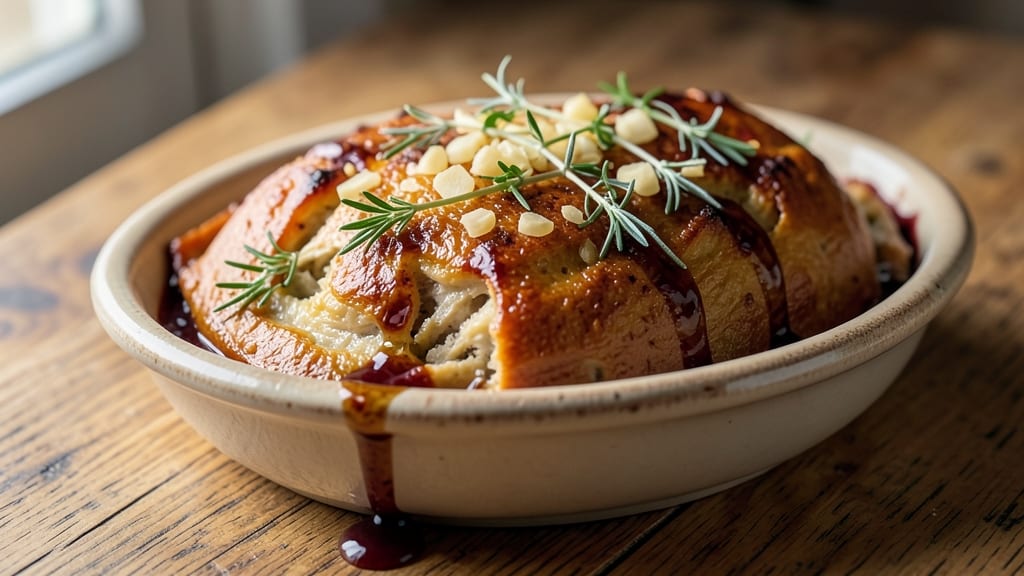
Creating a baked chicken liver pâté transforms humble offal into a luxurious spread with velvety texture and deep herbal notes—perfect for elevating any gathering. The process begins with carefully rendering the livers to remove bitterness, then blending them into a smooth, rich base before baking until just set.
This technique ensures a pâté that’s both elegant and approachable, with a silky finish that melts on the tongue.
The key to success lies in balancing the natural richness of the livers with bright, aromatic herbs like thyme and tarragon, which cut through the fat while adding complexity.
A touch of brandy or white wine infuses depth, while a light hand with salt and pepper preserves the pâté’s delicate flavor. Baking at a precise temperature—350°F—guarantees a smooth, creamy texture without breaking, resulting in a spread that’s restaurant-worthy yet simple to master.
Once baked, this pâté delivers a silky, velvety consistency with a golden crust that adds subtle crunch. Serve it warm with crusty bread for dipping, or chill it slightly for a more refined presentation.
The herbal depth pairs beautifully with sharp pickles or a crisp white wine, making it versatile enough for both casual and formal occasions. Every bite reveals layers of flavor—earthy, savory, and aromatic—that make it unforgettable.
For those looking to experiment, variations like adding caramelized onions or a hint of mustard introduce new dimensions, while a modern twist with smoked paprika or chili flakes adds heat.
Whether you’re hosting a dinner party or simply craving something indulgent, this pâté delivers professional results with minimal effort. Let’s get started on crafting yours.
Ingredients for baked chicken liver pate
Transform humble chicken livers into a velvety pâté with these premium ingredients—herbal depth meets luxurious texture.
| Ingredient | Amount | Notes |
|---|---|---|
| Chicken Livers 🍗 | 1 ½ lb | Fresh, trimmed of connective tissue |
| Unsalted Butter 🧈 | ½ cup | Cold, cut into small cubes |
| Shallots 🧅 | 3 whole | Finely minced, about 0.25 cup |
| Fresh Thyme Leaves 🌿 | ½ cup | Stems removed, finely chopped |
| Fresh Tarragon Leaves 🌿 | ¼ cup | Stems removed, finely chopped |
| Brandy 🍷 | ¼ cup | High-quality, 80-proof minimum |
| Dry White Wine 🍷 | ¼ cup | Sauvignon Blanc preferred |
| Diamond Crystal Kosher Salt 🧂 | ½ tsp | Fine grain for even seasoning |
| Freshly Ground Black Pepper 🌶️ | ¼ tsp | Coarsely ground for texture |
| Heavy Whipping Cream 🥛 | ¼ cup | Full-fat for richness |
| Fresh Parsley Leaves 🌿 | 2 tbsp | Finely chopped, for garnish |
| Cornstarch 🌾 | 1 tsp | For thickening pâté |
The quality of chicken livers is non-negotiable for this pâté. Opt for fresh, bright-red livers from a trusted butcher or specialty market like Whole Foods, where they’re typically sold pre-trimmed. If using frozen, thaw them overnight in the refrigerator—never under running water, as this can leach out flavors. Look for livers with minimal connective tissue, as these can impart bitterness. For the herbs, farmers market freshness is ideal, but high-quality dried thyme and tarragon from Penzeys Spices work in a pinch. The brandy and white wine should be high-proof, dry varieties—avoid sweet dessert wines, as they’ll overpower the delicate herbal notes. For butter, European-style unsalted like Plugrá or President melts more smoothly than American brands.
No brandy on hand? Dry sherry at equal measure delivers comparable depth, though with a slightly different profile. Fresh herbs unavailable? Dried thyme at one-third the amount suffices, but skip dried tarragon—its flavor profile doesn’t translate well. For the wine, dry vermouth works in a bind, though it adds a herbal note that may clash with the tarragon. The shallots can be swapped for finely minced red onion, though they’ll introduce a sharper bite. When handling livers, wear gloves—they can be slippery and may stain. For the cream, full-fat is non-negotiable; reduced-fat versions lack the necessary richness. If your pâté emerges too thin after baking, a cornstarch slurry (1 tsp cornstarch + 1 tbsp cold water) can rescue it without altering texture.
This pâté must be baked immediately after blending to achieve its signature silky texture. Store any unused livers in the coldest part of your fridge, wrapped in parchment and sealed in a resealable bag, for up to 2 days. Fresh herbs should be wrapped in damp paper towels and stored in a sealed container with a dry towel on top for up to 5 days. The finished pâté keeps for 3 days refrigerated in an airtight container, though it’s best enjoyed within 24 hours for peak texture. For longer storage, portion into small ramekins, cover with plastic wrap pressed directly on the surface, and freeze for up to 3 months. Reheat gently in a water bath at 160°F until just warmed through—microwaving risks breaking the emulsion.
Why You'll Love This Recipe
- Foolproof Ingredients: I swear by this combo—chicken livers are lean, fast-cooking, and packed with iron, while the butter and shallots melt into that velvety texture. No fancy techniques, just sear-and-bake simplicity.
- Herb-Packed Umami Bomb: That tarragon-thyme duo? It’s what turns this into something ridiculously good. The tarragon’s anise kick and thyme’s earthiness cut through the richness—like a fancy bistro flavor in my own kitchen.
- Weeknight to Holiday: Make a big batch on Sunday, and you’ve got appetizers for game day, a spread for dinner guests, or even a fancy charcuterie board. (Yes, even on a Tuesday night.)
- Budget Luxury Leftovers: Chicken livers are cheap, but this tastes like a $50 restaurant dish. Store it in the fridge for up to 5 days—perfect for quick lunches or last-minute gifts. My wallet and taste buds thank me.
Step-by-step instructions for baked chicken liver pâté
Here's the method for crafting a velvety pâté with perfect balance between richness and herbal brightness.
Prepare and Sauté the Chicken Livers
Begin by trimming any connective tissue from the 1.5 lb chicken livers using a sharp knife. Pat them completely dry with paper towels—this ensures they brown properly rather than steam. Cut the livers into ½-inch pieces for even cooking.
In a large skillet, melt 0.5 cup unsalted butter over medium heat until it foams. Add the liver pieces in a single layer and cook undisturbed for 3-4 minutes until they develop a deep golden crust on one side. Flip carefully and cook another 3-4 minutes until fully cooked through. The livers should be opaque with no remaining pink centers.
Remove the livers from the skillet and set aside, reserving the rendered butter and any browned bits in the pan. This butter will form the luxurious base of your pâté.
Cook the Aromatics and Deglaze
In the same skillet, add the 3 whole shallots that have been finely minced. Cook them over medium-low heat for 5-6 minutes until softened and translucent. Add the 0.5 cup fresh thyme leaves and 0.25 cup fresh tarragon leaves, stirring constantly for 1 minute until the herbs release their aromatic oils.
Pour in the 0.25 cup brandy and 0.25 cup dry white wine, scraping the bottom of the pan vigorously with a wooden spoon to incorporate all the browned bits. Let the liquid reduce by half—this concentrated flavor forms the pâté's foundation. The mixture should smell intensely herbal with a hint of caramelized richness.
Blend and Thicken the Pâté
Transfer the cooked livers, shallots, and herb mixture to a food processor. Add 0.25 cup heavy whipping cream and process until smooth, scraping down the sides as needed. The texture should be silky and homogeneous, with no visible liver pieces remaining.
Return the mixture to the skillet and stir in 1 tsp cornstarch to help thicken the pâté. Cook over low heat for 3-4 minutes, stirring constantly, until the mixture reaches a thick, spreadable consistency that coats the back of a spoon. Season generously with 0.5 tsp diamond crystal kosher salt and 0.25 tsp freshly ground black pepper to taste.
Bake for Richness and Finish
Transfer the pâté to a 4-inch round baking dish or ramekin. Smooth the top with a spatula and bake at 350°F for 20-25 minutes until the center is just set but still slightly jiggly—this ensures a perfect texture when served. The pâté should have a glossy sheen and be warm throughout when done.
Remove from the oven and let rest for 10 minutes before serving. Garnish with 2 tbsp finely chopped fresh parsley leaves just before serving to add a bright, fresh contrast to the rich pâté. Serve with crusty bread or crackers for the ultimate appetizer experience.
Pro Tips For Making Baked Chicken Liver Pate
- Soak Livers First: Skip the soaking, and you’ll end up with a bitter, metallic pate—no joke. Toss the livers in cold water with a splash of vinegar (or lemon juice) for 15-20 minutes, then rinse and pat very dry. This removes the blood and keeps them tender, not rubbery. (Yes, even if you’re impatient like me, don’t rush this.)
- Sweat Shallots Slow: After rinsing the livers, use that same pan to sweat the shallots—low heat, covered—for 8-10 minutes until they’re translucent and just starting to stick. High heat burns them before the flavor develops, and you’ll taste it. Sounds weird, but it works: the slow cook turns them silky, not sharp.
- Butter in Stages: Don’t dump all the butter at once. After browning the livers, remove half the pan’s fat, then add the butter in two batches—first to deglaze, then later to finish. This keeps the texture rich but not greasy, and the butter doesn’t burn before the livers are fully cooked. (Your future self will thank you.)
- Bake Until Firm: The pate’s done when it’s set but still slightly jiggly in the center—like a wobbly Jell-O. Overbaking turns it dry; underbaking leaves it raw. Check at 35-40 minutes (depending on your oven), then let it rest 10 minutes before unmolding. Trust the texture, not the time.
Best sauces and condiments for this dish
Herb-Infused Butter
Start with a simple yet transformative herb butter by blending 0.5 cup softened unsalted butter with 1 tbsp finely chopped fresh thyme, 1 tbsp chopped tarragon, and a pinch of kosher salt.
Roll into a log, chill for 1 hour, then slice thinly to top your pâté just before serving. The butter melts into the warm pâté, creating a luscious, aromatic finish that enhances the herbal notes without overpowering them. 🌿
Balsamic Glaze
For a sweet-tangy contrast, create a quick balsamic glaze by simmering 0.25 cup balsamic vinegar with 1 tbsp honey and 1 tsp Dijon mustard over medium heat for 5 minutes until reduced by half.
Drizzle generously over the pâté before serving to balance its richness with bright acidity. The glaze also adds a glossy sheen that makes the dish look restaurant-worthy. 🍷
Spicy Mustard Aioli
Whisk together 0.5 cup mayonnaise, 1 tbsp whole-grain mustard, 1 tsp smoked paprika, and 1 tsp lemon juice for a bold, creamy dip. The mustard cuts through the pâté’s richness while the smoky paprika adds depth.
Serve in a small bowl alongside the pâté for dipping crusty bread or crackers. This aioli pairs perfectly with the herbal pâté’s earthy undertones. 🌶️
Pickled Red Onions
Quick-pickle 1 cup thinly sliced red onions in a mixture of 0.5 cup apple cider vinegar, 1 tbsp sugar, and 1 tsp kosher salt for 30 minutes. The sharp, tangy onions provide a refreshing crunch and acidity that cut through the pâté’s richness.
Arrange them artistically on the plate alongside the pâté for both flavor and visual appeal. 🧅
Warm Honey-Mustard Sauce
Combine 2 tbsp Dijon mustard, 2 tbsp honey, and 1 tbsp warm water in a small saucepan. Simmer over low heat for 3 minutes, then whisk in 1 tbsp chopped fresh parsley.
This sauce adds a touch of sweetness and creaminess that complements the pâté’s herbal depth. Serve it on the side for dipping or drizzle lightly over the top. 🍯
Crispy Shallot Jam
Caramelize 1 cup thinly sliced shallots in 2 tbsp butter over low heat for 20 minutes until golden. Deglaze with 2 tbsp balsamic vinegar and 1 tbsp honey, then simmer until thickened.
Spoon this jam alongside the pâté for a sweet, jammy contrast that enhances the dish’s complexity. The caramelized shallots echo the aromatics in the pâté itself. 🍯
Nutrition facts
Frequently asked questions
Why do I need to trim connective tissue from chicken livers?
Connective tissue in livers can release bitter compounds during cooking, ruining the delicate flavor. Trimming ensures a smooth, rich pâté with clean herbal notes. Spend 5-10 minutes carefully removing any white or fibrous bits—your effort will be worth it!
Can I substitute brandy with something else?
Yes! Use dry sherry or apple cider vinegar in equal amounts—both add depth without overpowering. For a non-alcoholic option, try 1 tbsp lemon juice with 1 tsp sugar to mimic the acidity. The key is balancing richness with brightness.
What if my pâté is too thin after baking?
Don’t panic! Mix 1 tsp cornstarch with 1 tbsp cold water, then stir into the warm pâté. Heat gently for 2-3 minutes until thickened. For prevention, ensure your livers are fully cooked and drained of excess fat before blending.
How do I serve this pâté for a dinner party?
Transfer to a ramekin and chill for 30 minutes before serving. Garnish with herb butter or pickled onions for contrast. Serve with crusty baguette slices and chilled white wine (Sauvignon Blanc pairs perfectly). For a modern touch, arrange on a slate board with dried fruit or nuts for crunch.
Can I make this ahead of time?
Yes! Prepare the pâté up to 24 hours ahead and refrigerate in an airtight container. Reheat gently in a water bath at 160°F for 10-15 minutes, stirring occasionally. For freezing, portion into ramekins, cover tightly, and freeze for up to 3 months. Thaw overnight in the fridge before reheating.