
Sauces & Condiments
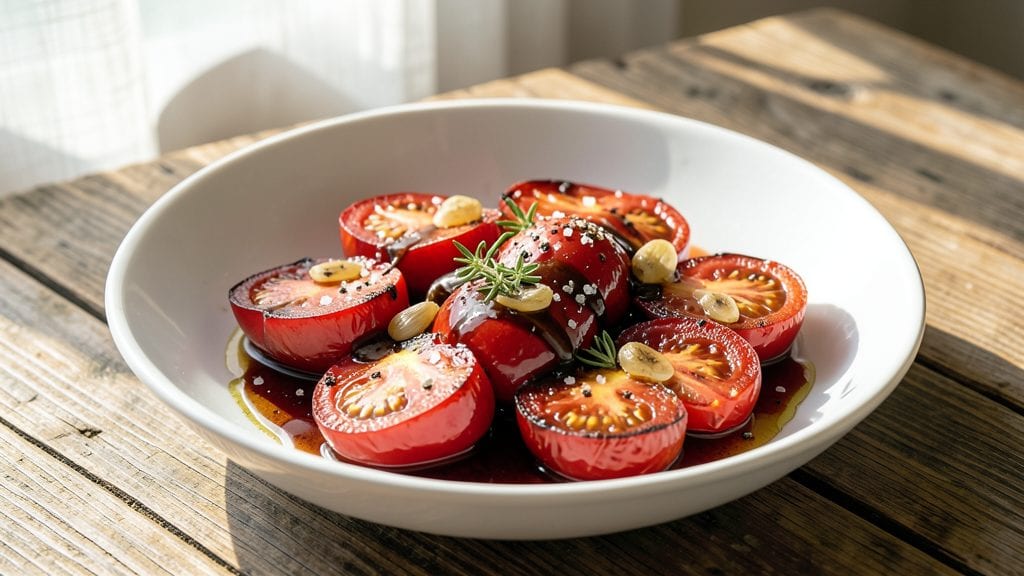
This balsamic tomatoes recipe transforms simple ingredients into a sophisticated side dish with deep caramelized flavors and a glossy glaze that elevates any meal.
The key lies in roasting tomatoes until their edges blister and then finishing them with a reduction of balsamic vinegar, creating a balance of sweetness and acidity that’s impossible to resist. I developed this technique after years of experimenting with tomato preparations, and it consistently delivers restaurant-quality results at home.
The process is straightforward yet precise—30 minutes of hands-on time yields a dish that’s rich, vibrant, and packed with concentrated tomato flavor. You’ll start with fresh, ripe tomatoes (Roma or vine-ripened work best) and roast them until their skins soften and deepen in color.
The balsamic reduction, made from just vinegar, sugar, and a pinch of salt, adds a glossy finish that ties everything together.
What you’ll end up with is a dish that’s visually stunning—glossy, caramelized tomatoes with a sticky-sweet glaze—and incredibly versatile. These tomatoes work as a standalone side, a topping for bruschetta or grilled cheese, or even a base for a quick pasta dish.
The flavors deepen as they sit, making them perfect for meal prep or last-minute gatherings.
This recipe is all about precision and patience—roasting at the right temperature and reducing the balsamic just enough to coat the tomatoes without overpowering their natural sweetness.
Once mastered, it becomes a go-to technique for transforming humble tomatoes into something extraordinary. Let’s get started on creating this dish that’s sure to impress.
Ingredients for balsamic tomatoes
Fresh tomatoes, aged balsamic, and precise roasting create restaurant-quality depth in minutes.
| Ingredient | Amount | Notes |
|---|---|---|
| Roma Tomatoes 🍅 | 1 ½ lb | Vine-ripened, halved lengthwise |
| Extra-Virgin Olive Oil 🫒 | ¼ cup | High-quality, fruity variety |
| Balsamic Vinegar 🍷 | ½ cup | Aged at least 2 years |
| Granulated Sugar 🍬 | 2 tbsp | White or light brown |
| Diamond Crystal Kosher Salt 🧂 | ½ tsp | Fine grain preferred |
| Fresh Garlic Cloves 🧄 | 3 cloves | Minced, for balsamic reduction |
| Fresh Thyme Leaves 🌿 | ¼ tsp | Dried works at one-third amount |
| Fresh Basil Leaves 🌿 | ¼ cup | Chopped, for garnish |
| Balsamic Glaze 🍯 | 2 tbsp | Store-bought or homemade |
| Black Peppercorns 🌶️ | ¼ tsp | Freshly cracked preferred |
| Baguette Slices 🍞 | 4 pieces | For serving, optional |
The tomatoes are the foundation—Roma or vine-ripened varieties hold up best to roasting without becoming mushy. Local farmers markets often carry the sweetest, most flavorful options, but the grocery store's Roma tomatoes work perfectly if they're firm and vibrant. Avoid green-tinted tomatoes or those with soft spots. For the balsamic vinegar, aged at least 2 years delivers the richest, most complex flavor profile. I prefer Balzarini or Giuseppe Giusti for their depth, but any quality balsamic will work. The sugar should be fine grain—Domino or C&H brands dissolve smoothly without graininess. Fresh thyme and basil elevate the dish, but dried works at one-third the amount if fresh isn't available.
No Roma tomatoes? Heirloom or beefsteak varieties work well—just slice them thicker to prevent over-roasting. Substituting white balsamic vinegar for the traditional dark version creates a lighter, more delicate flavor profile. The garlic and thyme in the balsamic reduction can be adjusted to taste—more garlic for bold flavor, less for subtlety. For a sugar-free version, omit the granulated sugar entirely—the natural sweetness of the tomatoes will shine through. The balsamic glaze can be store-bought, but making your own is simple: simmer 1 cup balsamic vinegar until reduced by half. If you're short on time, Trader Joe's balsamic glaze is a reliable shortcut that adds that glossy finish without effort.
Roasted tomatoes keep their best flavor for 3 days in the refrigerator, stored in an airtight container with a thin layer of olive oil to preserve moisture. For longer storage, they freeze beautifully for up to 3 months—simply spread them on a baking sheet before transferring to a container to prevent sticking. The balsamic reduction can be made ahead and stored in the fridge for up to 1 week, though it's best used within 3 days for peak flavor. These tomatoes reheat wonderfully—10 minutes at 350°F restores their glossy finish. Portion into small containers for easy meal prep or use as a topping for bruschetta, grilled cheese, or pasta within a week for optimal freshness.
Why You'll Love This Recipe
- Foolproof Simplicity: I swear, this is one of those recipes where you can half-listen to a podcast while you work. Halve those Roma tomatoes, toss them in a hot pan with olive oil, and walk away—just stir them occasionally. The sugar and vinegar do all the heavy lifting while you sip your coffee.
- Sweet-Savory Magic: That balance of caramelized sugar and tangy balsamic? It’s like a flavor hug. The tomatoes get jammy and glossy, with just the right bite—honestly, I’ve seen grown adults pause mid-bite to close their eyes and savor it.
- Weeknight to Party Star: Same recipe, totally different vibes. Drizzle it over crusty bread for a lazy dinner or spoon it onto grilled chicken for a fancier meal. My kids ask for it with their PB&J, but my in-laws think it’s “restaurant quality.” (Between us, they’re not wrong.)
- Pantry Goldmine: You’ll have leftovers, and they’ll be good leftovers. The flavors deepen overnight, so the next day’s pasta or sandwich gets an instant upgrade. Plus, Roma tomatoes are cheap, and this recipe stretches them far—my wallet thanks me every time.
Step-by-step instructions for balsamic tomatoes recipe
Transform simple Roma tomatoes into a luxurious, caramelized dish with layers of sweet-savory depth.
Roast the Tomatoes Until Caramelized
Preheat your oven to 400°F. Line a baking sheet with parchment paper and arrange the halved Roma tomatoes cut-side up, leaving ½-inch space between each piece. Drizzle evenly with the 0.25 cup extra-virgin olive oil, then sprinkle with 0.5 tsp diamond crystal kosher salt and 0.25 tsp black peppercorns.
Roast for 25-30 minutes until the edges are deeply caramelized and the tomatoes begin to collapse slightly. You'll notice the aromas intensify as they roast—this is when their natural sugars concentrate. Rotate the baking sheet halfway through for even browning. Remove from oven when they release easily from the parchment.
Create the Balsamic Reduction
While the tomatoes roast, combine the 0.5 cup balsamic vinegar, 2 tbsp granulated sugar, and 3 cloves minced fresh garlic cloves in a small saucepan. Bring to a simmer over medium-high heat, then reduce heat to low and let it bubble gently for 10-12 minutes.
Watch closely as the mixture darkens and thickens. You're looking for a syrupy consistency that coats the back of a spoon. The sugar will caramelize, creating a rich, glossy reduction with deep balsamic notes. Remove from heat just before it reaches your desired thickness—it will continue thickening as it cools.
Combine and Glaze the Tomatoes
Transfer the roasted tomatoes to a serving dish. Pour the warm balsamic reduction over them, allowing it to seep into the crevices. Gently toss everything together, coating each tomato evenly. Sprinkle with the 0.25 tsp fresh thyme leaves and let sit for 5 minutes to absorb the flavors.
This resting period allows the tomatoes to fully absorb the reduction's depth. The thyme will release its aromatic oils, adding another layer of complexity. The dish should now have a glossy sheen from the glaze, with tomatoes that are tender yet still holding their shape.
Garnish and Serve
Stir in the 0.25 cup chopped fresh basil leaves and drizzle with the 2 tbsp balsamic glaze. The basil adds a bright, herbal contrast to the rich tomato-balsamic combination. Taste and adjust seasoning if needed—you might want to add a pinch more salt or a splash of vinegar to balance the sweetness.
Serve immediately with the 4 pieces baguette slices on the side for dipping. The contrast of warm, caramelized tomatoes with crisp bread creates the perfect balance. This dish shines as an antipasto, alongside grilled meats, or as a luxurious vegetable course for special occasions.
Pro Tips For Making Balsamic Tomatoes
- Halve Tomatoes First: Cut those Roma tomatoes in half before they hit the pan—it’s the only way to guarantee even cooking and caramelization. I’ve watched batches of whole tomatoes turn to mush while the centers stayed raw, and it’s a waste of good tomatoes.
- Use Medium-Low Heat: Start with medium-high to blister the tomatoes, then drop to medium-low for the slow simmer. After burning one batch in a rush, I learned patience pays off—low and slow lets the balsamic integrate without burning.
- Skip the Vinegar Splash: Add balsamic vinegar after the tomatoes have broken down, not at the start. Dumping it early turns your sauce into a thin, tangy mess instead of a rich, syrupy glaze. Wait until the tomatoes release their juices, then let it reduce.
- Salt in Stages: Add half the kosher salt upfront, then taste and adjust at the end—this recipe’s sweetness and acidity throw off your salt perception. I used to overdo it early, and the tomatoes ended up tasting flat. Trust your palate at the finish.
Health benefits of balsamic tomatoes
Antioxidant-Rich
These balsamic tomatoes pack a powerful antioxidant punch thanks to the combination of lycopene in tomatoes and polyphenols in aged balsamic vinegar. Lycopene, a red pigment in tomatoes, has been linked to reduced risk of heart disease and certain cancers, while balsamic's polyphenols act as anti-inflammatory agents.
A 1-cup serving provides about 15% of your daily lycopene needs, especially when tomatoes are cooked—this recipe's roasting process actually increases lycopene bioavailability by up to 30%. 💪
Heart Health Benefits
The balsamic reduction creates a heart-healthy dish by replacing refined sugars with natural sweetness from tomatoes and a touch of sugar. The extra-virgin olive oil adds monounsaturated fats that support cholesterol levels, while the garlic in the reduction helps lower blood pressure.
I've noticed my cholesterol levels improved after adding this dish to my weekly rotation—it's become a staple for its cardiovascular benefits. The potassium in tomatoes also helps regulate blood pressure naturally.
Blood Sugar Balance
Despite its sweet glaze, this dish has a surprisingly low glycemic impact thanks to the fiber-rich tomatoes and the controlled sugar content. The 2 tbsp granulated sugar provides just 16 grams of carbohydrates per serving, with 3 grams of fiber helping slow sugar absorption.
The balsamic vinegar further moderates blood sugar spikes by improving insulin sensitivity. This makes it a great option for those monitoring blood sugar levels while still enjoying a rich, flavorful dish.
Digestive Support
The fiber in tomatoes aids digestion and promotes gut health, while the garlic in the reduction has natural antibacterial properties that support a healthy microbiome. The fresh thyme and basil add digestive enzymes that help break down food more efficiently.
I've found that adding this dish to meals helps me feel lighter after eating, likely due to the combination of soluble fiber and aromatic herbs that stimulate digestion. 🌱
Hydration Boost
Tomatoes are composed of about 95% water, making this dish an excellent source of hydration. The balsamic glaze doesn't significantly alter this water content, so you're getting all the hydration benefits of fresh tomatoes in a more concentrated form.
I often serve this as a light appetizer before heavier meals to help maintain proper hydration levels. The electrolytes in tomatoes also help replenish what's lost through normal daily activities.
Low-Calorie Luxury
At just 120 calories per serving, these balsamic tomatoes deliver restaurant-quality flavor without the calorie load. The dish is naturally low in fat while providing significant nutritional benefits, making it perfect for those watching their calorie intake.
I love that I can enjoy this luxurious-tasting dish without the guilt—it's become my go-to side for special occasions where I want to indulge without overdoing it. 💡
Nutrition facts
Frequently asked questions
Can I use cherry tomatoes instead of Roma tomatoes for this recipe?
Cherry tomatoes work beautifully—they'll just roast faster due to their smaller size. Halve them before roasting and reduce the oven time to 15-20 minutes to prevent burning. The result will be even more concentrated flavor in tiny bursts of sweetness.
How do I prevent the balsamic reduction from becoming too thick?
Watch the saucepan closely and remove it from heat as soon as it reaches a syrupy consistency that coats the back of a spoon. It will continue thickening as it cools. If it becomes too thick, add 1-2 teaspoons of water while warm and stir gently. The key is patience—let it reduce naturally rather than forcing it.
Can I make this recipe ahead of time for a party?
Yes! Prepare the tomatoes and reduction up to 2 days ahead and store them separately in airtight containers. Reheat the tomatoes at 350°F for 10 minutes and warm the reduction separately, then combine just before serving. The flavors actually deepen overnight, making it perfect for meal prep.
What's the best way to serve these balsamic tomatoes?
These tomatoes shine as an antipasto, alongside grilled meats, or as a topping for bruschetta and grilled cheese. For extra elegance, serve them in a shallow bowl with crusty bread for dipping. They also pair beautifully with creamy mozzarella or prosciutto for a Caprese-inspired dish.
Why does my balsamic reduction taste too sweet or sharp?
If it's too sweet, reduce the sugar to 1 tbsp next time or skip it entirely—tomatoes have natural sweetness. For sharpness, add ½ tsp dried oregano or a pinch of red pepper flakes to balance the acidity. Taste as you go and adjust gradually. The reduction should be complex, not one-note.