Breakfast & Brunch
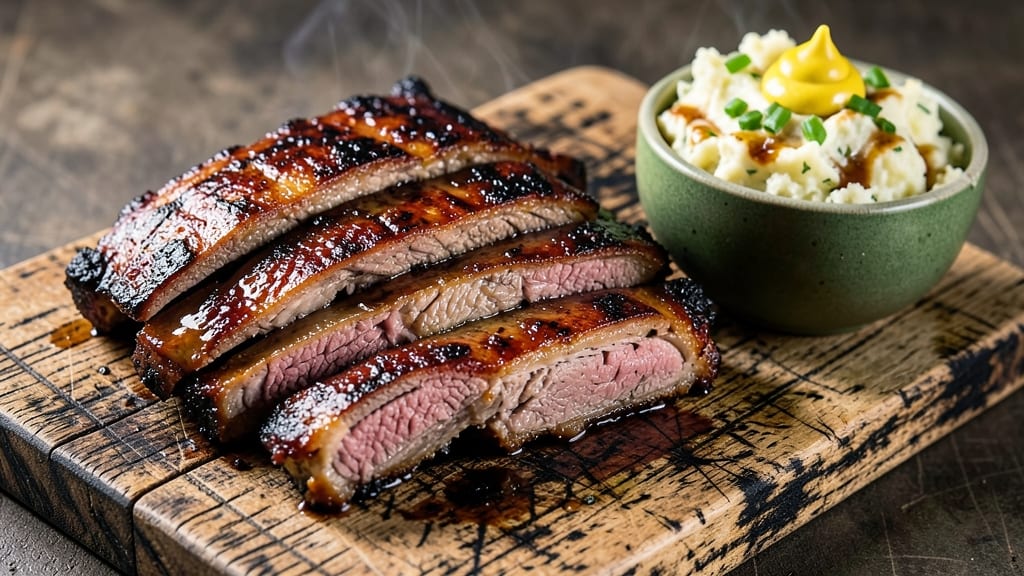
Cooking beef ribs in a Big Green Egg transforms tough cuts into melt-in-your-mouth perfection that rivals any competition-style pitmaster. The key lies in precise temperature control and a slow, steady cook that develops deep smoky-sweet flavors without drying out the meat.
I've perfected this method after countless hours testing different wood blends and cooking times to guarantee fall-off-the-bone tenderness every time.
The Big Green Egg's unique heat retention and even cooking surface create an ideal environment for ribs, allowing you to maintain consistent temperatures between 225°F-250°F for hours without fluctuations. This method eliminates guesswork—no need for a smoker or complex setup, just charcoal, wood chips, and patience.
The result is ribs with a tender texture and a bark that's perfectly balanced between sweet and smoky.
What you'll achieve is restaurant-quality beef ribs that are so tender they practically disintegrate at the touch of a fork, coated in a glossy sauce that caramelizes beautifully.
The Big Green Egg's portability also means you can cook these ribs in your backyard, on a patio, or even at a park—no kitchen required. This recipe delivers professional results with minimal equipment and maximum flavor.
Serve these ribs with classic sides like coleslaw, cornbread, and baked beans to complete the meal. The smoky-sweet profile pairs perfectly with a cold beer or sweet tea, making this an ideal dish for gatherings or a special weekend dinner.
Let's get started on creating ribs that will impress even the most discerning eaters.
Ingredients for beef ribs big green egg
Four pounds of meat, two woods, and a Big Green Egg transform tough ribs into melt-in-your-mouth perfection.
| Ingredient | Amount | Notes |
|---|---|---|
| Beef Ribs (Baby Back or St. Louis Style) 🥩 | 4 lb | Bone-in, meaty cuts preferred |
| Yellow Charcoal Briquettes 🔥 | 5 lb | King or other lump charcoal works best |
| Apple Wood Chips 🌳 | 1 cup | Soaked for 30 minutes minimum |
| Hickory Wood Chips 🌳 | 1 cup | Soaked for 30 minutes minimum |
| Beef Rib Dry Rub 🌶️ | ½ cup | Homemade or store-bought (see notes) |
| Yellow Mustard 🍯 | ¼ cup | As binder for dry rub |
| Apple Cider Vinegar 🍏 | ¼ cup | For mop sauce |
| Brown Sugar 🍚 | ¼ cup | Light or dark preferred |
| Black Peppercorns 🌶️ | 1 tbsp | Freshly cracked preferred |
| Garlic Powder 🧄 | 2 tsp | Not garlic salt |
| Onion Powder 🧅 | 2 tsp | Finely ground preferred |
| Smoked Paprika 🌶️ | 1 tbsp | For deep smoky flavor |
| Kosher Salt 🧂 | 1 tbsp | Diamond Crystal preferred |
| Fresh Cilantro 🌿 | ¼ cup | Chopped for garnish |
| Lime Wedges 🍋 | 2 whole | For serving |
The ribs are non-negotiable—baby back or St. Louis style with good meat-to-bone ratio. Costco or local butcher shops usually have the best quality, often pre-cut for convenience. Look for vibrant color and visible marbling. If buying whole slabs, trim excess fat to 1/4-inch thickness—this helps the rub adhere better. The wood chips? Trader Joe's sells pre-soaked ones if you're in a hurry, but I always soak my own for deeper flavor. Apple and hickory blend gives that perfect sweet-smoky balance the Big Green Egg excels at. Pro tip: King charcoal burns cleaner and hotter than standard briquettes, giving you more consistent temps.
No apple wood chips? Cherry or pecan wood works in a pinch, but skip the pine—it's too strong. The dry rub can be store-bought, but I make mine fresh with Trader Joe's smoked paprika and Diamond Crystal kosher salt for that professional touch. Mustard as a binder is key—it helps the rub stick without making the ribs soggy. Short on time? Olive oil works too. For the mop sauce, I use Bragg's apple cider vinegar—it's tangy enough to cut through the fat. The brown sugar in the rub? Light or dark both work, but light gives a cleaner bark. Freshly cracked peppercorns make all the difference—pre-ground loses flavor fast.
Store prepped ribs in the fridge for up to 2 days before cooking—this lets the rub penetrate deeper. The wood chips? Keep them submerged in water until ready to use. Leftover ribs? Reheat at 275°F for 20 minutes with a splash of apple juice—they'll taste even better. The Big Green Egg's heat retention means you can pause cooking overnight if needed—just maintain 225°F with a lid. Garnish with cilantro and lime right before serving—trust me on this. These ribs keep well for 3 days in the fridge, but they won't last that long.
Why You'll Love This Recipe
- Two-Zone Magic: I swear by the Big Green Egg’s split-zone cooking—charcoal on one side for that smoky bark, indirect heat on the other to tenderize ribs without fuss. No flipping briquettes constantly or guessing temps; just set it and let the Egg do the work.
- Smoke Bomb Flavor: That mix of apple and hickory wood chips? Sweet, smoky, and just a little tangy—like a campfire and a bakery had a baby. The dry rub sticks to the ribs like glue, so every bite has that caramelized crust and deep, meaty richness.
- Tailgate or Tuesday: Honestly, these ribs work for everything. Pack them in a cooler for a game day, serve them at a backyard BBQ, or even reheat leftovers for a lazy Sunday. The Egg’s portability means no excuses—just fire up and feed a crowd (or just me, no judgment).
- Leftovers That Don’t Suck: Most rib recipes turn sad the next day, but not these. The Big Green Egg’s even heat keeps them juicy, and I’ve reheated slices straight from the fridge with just a quick sizzle—crispy outside, melt-in-your-mouth inside. Budget win, too; a full rack feeds four and leaves enough for lunches.
Step-by-step instructions for smoky-sweet fall-off-bone beef ribs
Here's how to transform tough ribs into tender, smoky perfection using your Big Green Egg.
Prepare the Ribs and Create the Dry Rub
Remove the beef ribs from the refrigerator and let them sit at room temperature for 30 minutes. This ensures even cooking and prevents cold spots. Pat the ribs dry with paper towels—moisture is the enemy of good bark.
In a small bowl, combine the 0.5 cup beef rib dry rub, 1 tablespoon kosher salt, 1 tablespoon smoked paprika, 2 teaspoons garlic powder, 2 teaspoons onion powder, and 1 tablespoon freshly cracked black peppercorns. Mix thoroughly until evenly distributed. I like to press the rub firmly into the ribs, especially in the crevices, to ensure maximum flavor penetration.
Build and Light the Big Green Egg
Arrange the 5 pounds of yellow charcoal briquettes in a ring around the inside of the Big Green Egg. Place the 1 cup soaked apple wood chips and 1 cup soaked hickory wood chips directly on top of the charcoal. Light the charcoal using a chimney starter or long matches, then close the lid and let it burn for 15 minutes to establish a consistent temperature.
After 15 minutes, open the lid and check for even heat distribution. You should see a blanket of blue smoke with minimal white smoke. If the heat isn't even, rearrange the charcoal and wood chips to create a more uniform cooking surface. This step is crucial for maintaining the right temperature throughout the cook.
Apply the Mustard Binder and Smoke the Ribs
Once the Egg is properly heated, spread 0.25 cup yellow mustard evenly over the ribs, coating them completely. The mustard acts as a binder for the dry rub and helps create a sticky, flavorful bark. Place the ribs bone-side down on the grill grate, arranging them in a single layer.
Close the lid and smoke the ribs at 225°F for 3 hours. Resist the urge to peek—the temperature fluctuations from opening the lid will extend your cook time. After 3 hours, flip the ribs bone-side up and continue smoking for another 1 hour. This two-sided cooking ensures even bark development and tender meat.
Wrap and Finish for Maximum Tenderness
After the initial smoke, prepare a wrap by combining 0.25 cup apple cider vinegar and 0.25 cup brown sugar in a small bowl. Mix well to create a sticky mop sauce. Brush this mixture evenly over the ribs, focusing on the meaty portions. Then, wrap the ribs tightly in heavy-duty aluminum foil, sealing the edges completely.
Return the wrapped ribs to the Egg and continue cooking at 225°F for an additional 2-3 hours, until the internal temperature reaches 195-203°F and the meat is fork-tender. The wrap helps break down collagen and infuse the ribs with the sweet-tangy mop sauce, ensuring fall-off-the-bone tenderness.
Rest and Serve with Fresh Garnishes
Once the ribs reach the desired internal temperature, remove them from the Egg and let them rest for 10 minutes before unwrapping. This resting period allows the juices to redistribute, preventing them from running out when you cut into the meat. Unwrap the ribs carefully, discarding the foil.
Transfer the ribs to a cutting board and garnish with 0.25 cup chopped fresh cilantro. Serve immediately with the 2 whole lime wedges on the side for a bright, citrusy contrast. The ribs should have a deep mahogany bark on the outside and tender, juicy meat that pulls apart easily with minimal effort. Enjoy with extra mop sauce for dipping!
Pro Tips For Making Beef Ribs Big Green Egg
- Preheat Charcoal Like a Boss: Light those yellow briquettes in the Big Green Egg at least 20 minutes before cooking—not just when you’re ready. I learned this the hard way after my first batch of ribs took forever to get going because the grill was still cold. Once the coals are white-hot and spread evenly, you’ll hit that sweet spot of 250°F for low-and-slow without fighting the thermometer.
- Soak Wood Chips Early: Toss your apple and hickory wood chips in water for at least 30 minutes before grilling—no need to soak overnight. This keeps them from burning too fast and gives you that steady, smoky aroma the whole cook. Pro move: Use a mesh bag so you can just toss them straight on the coals.
- Skip the Crowding: If you pile ribs too close together, they’ll steam instead of sear. Leave at least 1 inch of space between racks so heat circulates—this is how you get that crispy bark. I used to cram them in like sardines, and the results were sad. Trust me, a little patience here makes all the difference.
- Wrap at 165°F: Don’t wait until the ribs are falling apart to wrap them in foil—hit 165°F internal temp first. This is the non-negotiable sweet spot where they’re tender enough to handle but still firm enough to hold their shape. After wrapping, let them rest 10-15 minutes before unwrapping to finish with a quick sear. (Yes, even if you’re impatient like me.)
Regional styles of this beef ribs big green egg
Texas BBQ Style
The Big Green Egg excels at replicating Texas-style BBQ ribs, where low-and-slow cooking is key.
For this approach, use a 3-2-1 method: 3 hours bone-side down at 225°F, then 2 hours bone-side up, followed by 1 hour wrapped in butcher paper with ½ cup apple juice and 2 tbsp brown sugar.
Texas pitmasters swear by this technique to create that signature tender bark while keeping the meat moist. I like to add 1 tbsp of liquid smoke to the mop sauce for an extra smoky punch that’s pure Texas BBQ. 🔥
Carolina Vinegar-Based
In the Carolinas, ribs get their tangy kick from a vinegar-heavy sauce. For this style, replace the apple cider vinegar mop with a mix of ½ cup apple cider vinegar, ¼ cup apple juice, and 1 tbsp hot sauce.
Cook the ribs unwrapped for 4 hours total at 225°F, flipping once after 2 hours. The Big Green Egg’s even heat distribution ensures the vinegar doesn’t burn while infusing the meat with that signature tang.
Serve with extra vinegar sauce on the side for dipping—trust me, it’s a game-changer. 🍯
Korean-Inspired Galbi
Transform your beef ribs into Korean-style galbi by marinating them overnight in a blend of ¼ cup soy sauce, 2 tbsp brown sugar, 1 tbsp sesame oil, 1 tbsp grated ginger, and 3 minced garlic cloves.
Cook in the Big Green Egg at 250°F for 2 hours, flipping once, then finish with 1 hour wrapped in foil with 1 tbsp gochujang for heat. The Egg’s high-heat capability makes it perfect for this fusion style, delivering smoky-sweet ribs with a bold Korean twist.
Garnish with sesame seeds and sliced green onions. 🌶️
Italian-Inspired Osso Buco
For an unexpected but delicious twist, cook your ribs like osso buco. Sear the ribs in the Egg at 400°F for 10 minutes to caramelize the rub, then reduce heat to 225°F and add 1 cup beef broth and ½ cup red wine to the Egg’s water pan.
Cook for 3 hours, basting occasionally. Finish with a sprinkle of fresh rosemary and serve with a side of polenta. The Big Green Egg’s versatility lets you switch from smoky BBQ to Italian-inspired flavors with ease. 🌿
Spicy Cajun Style
Give your ribs a Louisiana kick by adding 1 tbsp Cajun seasoning to your dry rub and using ½ cup hot sauce in the mop. Cook the ribs at 225°F for 5 hours total, flipping once after 2.5 hours.
The Big Green Egg’s ability to maintain low temps for extended periods ensures the spices penetrate deeply without burning. Serve with a side of spicy cornbread and pickled jalapeños to balance the heat. This style is perfect for those who love bold, fiery flavors. 🌶️✨
Nutrition facts
Frequently asked questions
What's the ideal temperature range for cooking beef ribs in a Big Green Egg?
For perfect fall-off-the-bone tenderness, maintain a consistent 225°F-250°F throughout the cook. The Big Green Egg's heat retention makes it easier to hold these low temperatures without fluctuations that can dry out the meat. Use an internal probe thermometer to monitor the ribs' internal temperature, aiming for 195-203°F before removing them.
Can I use regular charcoal instead of King charcoal?
While King charcoal burns cleaner and hotter, regular briquettes will work in a pinch. Just expect slightly more ash and potential temperature fluctuations. For best results with the Big Green Egg, use 5 pounds of high-quality lump charcoal like Cowboy or Royal Oak to maintain even heat. The Egg's dome shape helps contain heat better than open grills, but premium charcoal still makes a noticeable difference.
How do I know when the ribs are done?
Look for three key indicators: the internal temperature should reach 195-203°F, the meat should pull away from the bones with minimal effort, and the bark should be deep mahogany with slight cracks. For extra confirmation, gently press between two ribs with tongs—they should feel tender enough to separate easily. The Big Green Egg's even cooking ensures all these signs appear simultaneously.
What if my Big Green Egg doesn't have a built-in thermometer?
Invest in a wireless grill thermometer like the Meater or Thermoworks Smoke—they're worth every penny. These probes give you real-time temperature readings both inside the Egg and the meat, preventing guesswork. Without one, you'll need to open the lid occasionally to check charcoal color (gray ash with red coals = 225°F), but this causes temperature drops that extend cook time.
Can I cook these ribs overnight in the Big Green Egg?
The Egg's excellent heat retention lets you pause cooking overnight. Just maintain 225°F with the lid closed and resume in the morning. For overnight cooks, I recommend wrapping the ribs in foil after the initial 3 hours of unwrapped smoking. This technique works especially well for large batches or when you want to cook during cooler evenings. The ribs will continue tenderizing while you sleep.