Soups & Stews
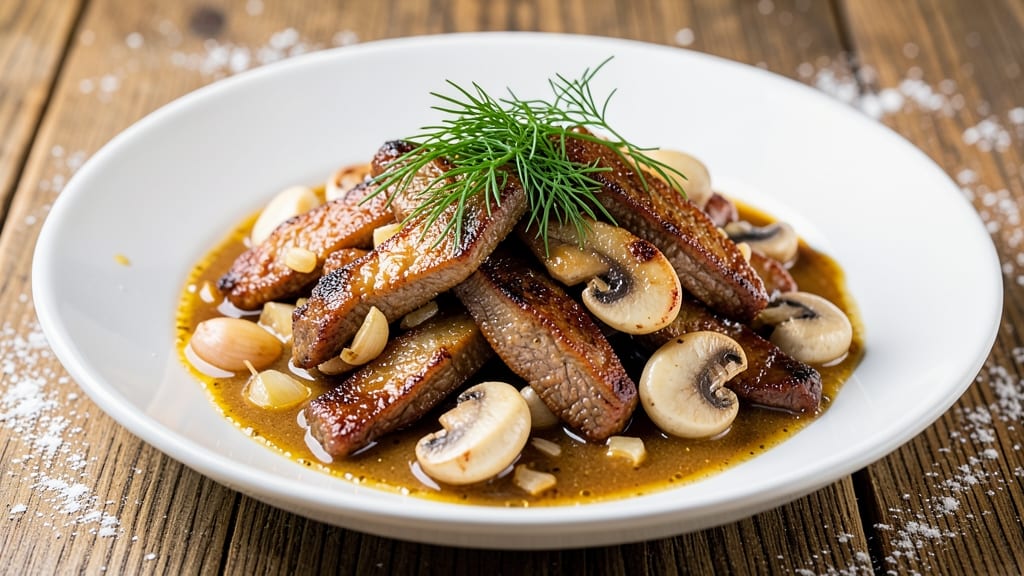
This original Russian beef stroganoff recipe transports you to 19th-century St. Petersburg, where aristocrats first savored its creamy, aromatic harmony of beef, mushrooms, and sour cream.
The dish's aristocratic roots trace back to the Stroganov family, whose refined taste shaped Russian haute cuisine—now you can recreate its velvety richness at home.
What makes this version authentic is the balance of tangy sour cream, earthy mushrooms, and subtle mustard, all simmered into a luscious sauce that clings perfectly to tender beef strips.
The secret lies in proper technique: searing the beef until deeply browned develops a rich foundation, while mushrooms release their umami essence during slow cooking. A traditional roux—made with butter and flour—thickens the sauce without overpowering its delicate flavors, ensuring every spoonful delivers that signature Russian comfort.
This method transforms simple ingredients into a dish worthy of a tsar's table, yet remains approachable for modern kitchens.
By the time you plate this stroganoff, you'll have a dish that's creamy yet not heavy, savory with just the right tang, and perfectly balanced between tender beef and earthy mushrooms.
The sauce should coat the noodles or rice like a luxurious blanket, with just enough body to hold its shape. Serve with buttery egg noodles or steamed rice to complete the experience—each bite will transport you to a grand Russian dining hall.
For those seeking authenticity, this recipe preserves the original Stroganov technique while adapting it for today's kitchens. The result is a dish that's both historically accurate and foolproof for home cooks.
Perfect for family dinners or special occasions, this beef stroganoff delivers restaurant-quality richness without the fuss. Let's bring Russian culinary tradition to your table.
Ingredients for beef stroganoff original russian
Authentic Russian ingredients transform simple beef and mushrooms into velvety aristocratic elegance.
| Ingredient | Amount | Notes |
|---|---|---|
| Beef Tenderloin 🥩 | 1 ¼ lb | Cut into 0.5-inch strips, boneless |
| Fresh White Mushrooms 🍄 | 16 oz | Sliced, cremini or button |
| Shallots 🧅 | 2 whole | Minced, or 2 tbsp dried onion |
| Garlic Cloves 🧄 | 4 cloves | Minced, fresh preferred |
| Unsalted Butter 🧈 | 4 tbsp | European-style preferred |
| All-Purpose Flour 🌾 | 2 tbsp | For traditional roux |
| Sour Cream 🥛 | 1 cup | Full-fat, Russian-style preferred |
| Dijon Mustard 🍯 | 1 tbsp | For authentic tang |
| Beef Stock 💧 | 1 ½ cups | Homemade or high-quality |
| Dry White Wine 🍷 | ½ cup | Medium-bodied, like Pinot Grigio |
| Fresh Dill 🌿 | ¼ cup | Chopped, stems removed |
| Egg Noodles 🍝 | 8 oz | Fresh or high-quality dried |
| Salt 🧂 | 1 tsp | Diamond Crystal preferred |
| Black Pepper 🌶️ | ½ tsp | Freshly cracked |
| Lemon Juice 🍋 | 1 tbsp | Freshly squeezed |
The beef selection is critical for this dish. Tenderloin delivers the most refined texture, though top sirloin works well for a more budget-friendly option. Look for cuts with good marbling at Whole Foods or your local butcher—they'll often have pre-cut strips ready for stroganoff. Mushrooms should be firm and fresh, with no sliminess; cremini or button varieties provide the perfect earthy balance. For the sour cream, Russian-style brands like Orekhovskaya elevate the dish, though full-fat American varieties work in a pinch. The shallots and garlic should be fresh, as their aromatic compounds are vital for building the sauce's depth.
Substitutions can be made with care. If you lack white wine, beef stock mixed with 1 tbsp lemon juice replicates the acidity beautifully. Fresh dill is ideal, but dried dill at one-third the amount suffices. For the roux, European-style butter adds richness, but regular unsalted butter works if that's all you have. The Dijon mustard is non-negotiable for authenticity—it provides the subtle tang that defines stroganoff. If you're using dried mushrooms, soak them first and reduce the beef stock by 0.25 cups to maintain sauce balance. The egg noodles should be fresh or high-quality dried; avoid pre-cooked varieties, as they lack the proper texture.
Proper storage extends this dish's life without compromising quality. The cooked stroganoff keeps for 4-5 days in the refrigerator, with the sauce thickening slightly upon reheating—simply add 1-2 tbsp beef stock to restore its original consistency. For longer storage, freeze portions in airtight containers for up to 3 months. The fresh mushrooms and shallots should be used within 5 days of purchase, while the beef can be refrigerated for 3-4 days before cooking. The sour cream and wine can be refrigerated for up to 2 weeks and 6 months respectively, though the wine's quality degrades over time. Always reheat stroganoff gently over low heat to preserve its creamy texture.
Why You'll Love This Recipe
- One-Pan Magic: I swear by this recipe because it’s all about minimal cleanup. Sear the tenderloin and mushrooms in the same pan, then deglaze with a splash of beef broth—no extra pots, no fuss. The butter and shallots caramelize right there, turning into a rich, golden sauce that practically coats itself.
- Rich Without Effort: That tenderloin? It melts in your mouth, but the real star is the sauce—creamy from butter and mushrooms, brightened just enough by a hint of garlic. It’s the kind of dish where every bite feels indulgent, even when you’re too tired to care.
- Leftovers That Don’t Suck: Honestly, this recipe makes way more than you’ll eat in one sitting. The sauce thickens beautifully when reheated, and it’s perfect cold in a sandwich the next day. (Yes, even on a Tuesday night.) My freezer’s full of these because they’re that reliable.
- Weeknight Hero: Between us, this is my go-to when I need something impressive but still unfussy. The tenderloin feeds a crowd, the mushrooms add depth without extra work, and the shallots give it that classic Russian warmth. It’s the dish that makes me look like a home cook genius—no one suspects how easy it was.
Step-by-step instructions for beef stroganoff with authentic Russian technique
Master this classic dish through precise technique and careful timing for velvety sauce and tender beef.
Sear the Beef Tenderloin for Maximum Flavor
Pat the 1.25 lb beef tenderloin completely dry with paper towels—this ensures a proper sear. Cut into ½-inch strips against the grain for optimal tenderness. Heat 2 tablespoons of the unsalted butter in a large skillet over medium-high heat until foaming. Add the beef in a single layer and cook undisturbed for 2-3 minutes until deeply browned on one side.
Flip the strips and continue cooking for another 2-3 minutes until they reach medium-rare (130°F internal temperature). Remove the beef from the skillet and set aside on a plate, leaving the rendered fat in the pan. This initial sear builds the foundation for rich flavor in your stroganoff. If the beef releases easily from the pan, it's ready—if not, let it cook another 30 seconds before flipping.
Build the Roux and Sauté Aromatics
Reduce the heat to medium and add the remaining 2 tablespoons unsalted butter to the skillet. Toss in the 16 oz sliced fresh white mushrooms, spreading them evenly across the pan. Cook for 5-6 minutes until they release their moisture and begin to brown, stirring occasionally. Remove the mushrooms with a slotted spoon and set aside with the beef.
In the same skillet, add 2 minced shallots and 4 minced garlic cloves, cooking for 1-2 minutes until fragrant. Sprinkle in the 2 tablespoons all-purpose flour and stir vigorously for 1 minute to create a light roux. This will thicken your sauce later—don't let it brown. Immediately pour in the ½ cup dry white wine, scraping up any browned bits from the bottom of the pan with a wooden spoon. Let the wine simmer for 2-3 minutes until reduced by half.
Develop the Sauce with Beef Stock and Mustard
Pour in the 1.5 cups beef stock and bring to a gentle simmer. Stir in the 1 tablespoon Dijon mustard and 1 teaspoon salt, then return the beef and mushrooms to the skillet. Let everything simmer together for 5-6 minutes until the sauce begins to thicken slightly and coats the back of a spoon. The beef should be heated through but still tender—overcooking at this stage will make it tough.
Taste the sauce and adjust seasoning with ½ teaspoon black pepper and an additional pinch of salt if needed. The sauce should be rich but not overly salty—balance is key in traditional stroganoff. If the sauce is too thin, let it reduce uncovered for another 2 minutes on medium heat. Remove from heat and stir in the 1 tablespoon lemon juice to brighten the flavors.
Finish with Sour Cream for Signature Texture
Temporarily remove the skillet from heat and gently stir in the 1 cup sour cream using a silicone spatula. Work quickly to avoid curdling—this is the moment that matters. Return the skillet to low heat and let the sauce warm through for 1-2 minutes, stirring constantly. The heat should be just enough to meld the flavors without breaking the cream.
Garnish with ¼ cup chopped fresh dill and let the dish rest for 3-5 minutes before serving. This resting period allows the sauce to thicken slightly and the flavors to meld. The final sauce should be velvety, with just enough body to coat the noodles without being gluey.
Cook and Combine with Egg Noodles
While the stroganoff sauce rests, cook the 8 oz egg noodles in a separate pot of salted boiling water for 1 minute less than package instructions specify. They'll finish cooking in the sauce. Drain the noodles and return them to the pot, tossing with 1 tablespoon unsalted butter to prevent sticking.
To serve, divide the noodles among plates and ladle the stroganoff sauce generously over the top. The sauce should cling to each strand of noodle, creating a harmonious blend of textures. Garnish with additional fresh dill if desired. Serve immediately—this dish is best enjoyed fresh from the stove.
Pro Tips For Making Beef Stroganoff Original Russian
- SEAR THE BEEF IN BATCHES: I learned this the hard way—crowding the pan turns your beef into sad, steamed strips instead of golden, crusty perfection. Work in 2-3 pieces at a time, giving each side 2-3 minutes on high heat until deep brown. The extra effort keeps the texture rich and the flavor bold.
- SLICE MUSHROOMS THIN AND EVEN: Thick mushroom chunks? They’ll turn to mush while the stroganoff simmers. Aim for paper-thin slices—almost translucent in spots—and cook them low and slow until they’re tender but still hold their shape. (Yes, even if you’re impatient like me.)
- DEGLAZE WITH A SPLASH OF VODKA: Skip the wine unless you’re making a fancy version—traditional stroganoff uses vodka for deglazing. Just 2 tablespoons after searing the beef lifts those browned bits into the sauce, adding depth without overpowering. (Your future self will notice the difference.)
- LET THE SAUCE REDUCE UNTIL THICK: The sauce should coat the back of a spoon, not pool like soup. Simmer uncovered for 10-15 minutes, stirring occasionally, until it’s glossy and clings to the beef. Skim excess fat if needed—this isn’t a gravy, it’s a velvety blanket for the meat.
Wine and beer pairings for this beef stroganoff original russian
Russian White Wine
For an authentic pairing, reach for a dry Russian white wine like Krymskiy Muscat or Aligote from the Crimea region. These wines offer crisp acidity and subtle mineral notes that cut through the richness of the sour cream sauce while complementing the earthy mushrooms.
Serve slightly chilled at 45-48°F—just enough to refresh your palate between bites. 🍷
Medium-Bodied Pinot Grigio
If Russian wines are hard to find, a medium-bodied Pinot Grigio from Italy or California works beautifully. Its citrus and pear notes harmonize with the dish’s tangy-sweet balance, while its light body won’t overwhelm the creamy texture.
Look for bottles labeled "superiore" for added complexity. Pair with a 6-8 oz pour to maintain balance through the meal.
Crisp Lager Pairing
A German or Czech-style pilsner, like Warsteiner or Pilsner Urquell, provides a refreshing contrast to the stroganoff’s richness. The 4-5% ABV ensures it won’t compete with the dish but instead cleanses your palate between bites. Serve at 40-42°F for optimal crispness—this is my go-to for casual gatherings. 🍺
Dark Beer for Heartier Plates
For a heartier version (perhaps with added onions or a touch of smoked paprika), a dark wheat beer like Weihenstephaner Hefeweizen Dunkel adds malty depth that mirrors the stroganoff’s umami.
The banana and clove notes in the beer enhance the dish’s earthy mushrooms and mustard. Opt for a 5-6 oz pour to avoid overpowering the sauce.
Non-Alcoholic Options
For non-drinkers, a sparkling mineral water with a lemon wedge or a cucumber-mint infused iced tea brightens the meal. The acidity in both mimics wine’s palate-cleansing effect, while the herbs echo the dish’s fresh dill garnish. Chill to 38-40°F for the best experience. ✨
Nutrition facts
Frequently asked questions
Why does authentic stroganoff use Dijon mustard instead of regular mustard?
The Dijon mustard provides a refined, subtle tang that balances the richness of the sour cream without overpowering the dish. Regular American mustard is too sharp and can make the sauce taste bitter. The French-style Dijon adds complexity that aligns with Russian aristocratic cuisine's attention to flavor harmony.
Can I substitute beef tenderloin with another cut?
Yes, but choose tender cuts like top sirloin or filet mignon. Avoid tougher cuts like chuck—they won't become tender enough during the short cooking time. For best results, cut the meat into ¼-inch strips against the grain to ensure tenderness.
What's the secret to preventing a curdled sour cream sauce?
Always stir the sour cream off the heat and work quickly—it should never boil. Keep the heat at low and stir constantly for just 1-2 minutes until warmed through. Adding a splash of cold beef stock can help stabilize the texture if it starts to separate.
How do I make this dish vegetarian?
Replace the beef with 12 oz portobello mushrooms or extra-firm tofu (pressed and sliced). Use the same cooking method for the mushrooms—sauté until deeply browned. For tofu, pan-fry until crispy before adding to the sauce. Keep all other ingredients identical for authentic flavor.
Can I prepare stroganoff ahead of time?
Yes, but assemble it last-minute. Cook the beef and sauce 1 day ahead, then refrigerate. When ready to serve, reheat gently and stir in the sour cream just before adding to the noodles. The sauce will thicken slightly—thin with 1 tbsp beef stock if needed.