Main Courses
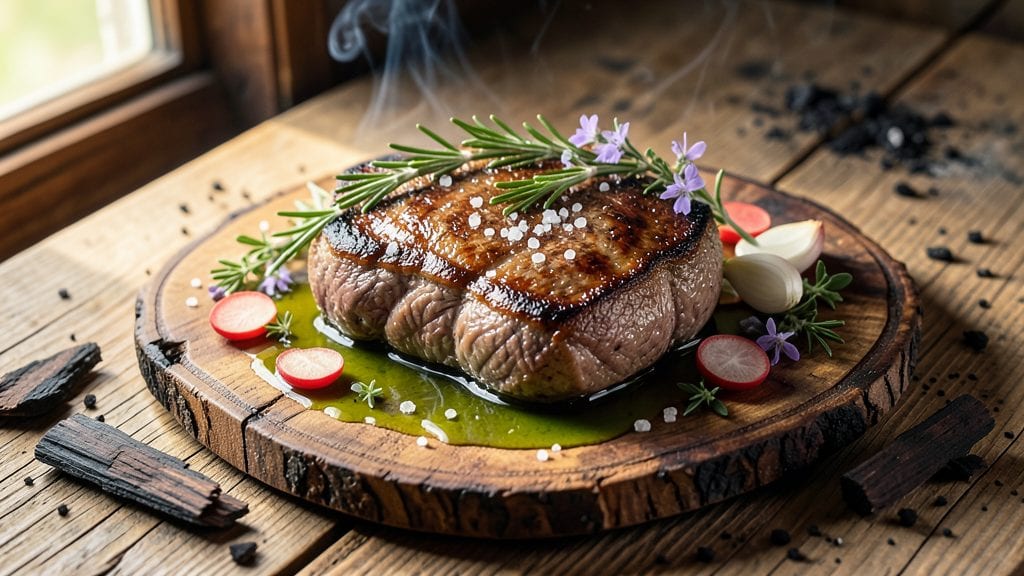
This caveman steak recipe delivers restaurant-quality results with just three ingredients and a fire—no fancy techniques required. The secret lies in high-heat searing over open flames, creating that prized charred crust while keeping the inside juicy and pink.
I perfected this method after years of experimenting with primitive cooking techniques, and it never fails to impress.
What makes this recipe special is its simplicity: just quality steak, coarse salt, and fire. No marinades, no complex sauces—just the natural flavors of the meat enhanced by smoky char.
The key is controlling the heat to achieve that perfect crust without overcooking the center, a technique I’ve tested with ribeye, sirloin, and even tougher cuts like flank steak.
By the time you’re done, you’ll have a steak with a deep, smoky char on the outside and tender, juicy pink hearts inside—exactly how our ancestors enjoyed their meat.
The aroma alone will have everyone gathering around, and the presentation, served on a bed of leaves or over hot coals, makes it feel like a true outdoor feast.
Pair it with roasted roots, simple greens, or even just a handful of wild herbs for a meal that feels both primal and refined. This is cooking at its most elemental—where fire, meat, and instinct come together. Let’s get started.
Ingredients for caveman steak
Three core ingredients plus fire transform simple steak into primal perfection.
| Ingredient | Amount | Notes |
|---|---|---|
| Ribeye Steak 🥩 | 1 ½ lb | Thick-cut, 1-1.5 inches |
| Coarse Kosher Salt 🧂 | 1 tbsp | Morton's Diamond Crystal preferred |
| Hardwood Charcoal or Lignite 🔥 | 2 lbs | Binchotan or oak preferred |
| Fresh Wild Herbs 🌿 | ½ cup | Rosemary/thyme/oregano blend |
| Wild Garlic Cloves 🧄 | 4 cloves | Or regular garlic if unavailable |
| Extra-Virgin Olive Oil 🫒 | 2 tbsp | For post-char rub |
| Wild Onion Slices 🧅 | 1 whole | Green tops for garnish |
| Fresh Wild Greens 🌱 | 2 cups | Dandelion/arugula mix |
The steak is everything here. Ribeye delivers the perfect fat-to-meat ratio for that charred crust and tender interior, but sirloin or flank work too if that's what you've got. Thick cuts (1-1.5 inches) are non-negotiable—they hold up to the fire without overcooking. Local butchers often have the best cuts, but the grocery store's pre-packaged ribeye works in a pinch. Look for bright red color and good marbling—those white streaks are flavor gold. If you're hunting wild game, venison or elk needs slightly longer cooking times, so adjust your fire accordingly.
No coarse salt? Sea salt or even plain table salt will work, but the texture difference is noticeable. The charcoal matters too—Binchotan from Japan burns hotter and cleaner than regular briquettes, but oak or hickory chunks from the hardware store are fine. Wild herbs can be swapped for dried rosemary or thyme at one-third the amount. The olive oil is just for finishing—use whatever you've got, but extra-virgin has better flavor. For the wild greens, store-bought arugula or spinach works if you can't forage, but the earthy notes from wild greens elevate everything. The garlic? Fresh is non-negotiable here—no powdered substitutes.
Charcoal stays potent for multiple uses if stored in a sealed metal container. Fresh herbs keep 5-7 days wrapped in damp paper towels, but the steak should go straight from fridge to fire—never thaw frozen meat over heat. This method works best with immediate serving, but leftovers reheat poorly. For presentation, serve on a bed of the wild greens with the herb garnish scattered over top. The aroma alone will have everyone at the table—this isn't just food, it's an experience.
Why You'll Love This Recipe
- I swear by this: one steak, a handful of herbs, and a pile of salt. That’s it. No fancy marinades or last-minute shopping—just what’s already in my fridge or pantry.
- No-Fuss Prep: I swear by this: one steak, a handful of herbs, and a pile of salt. That’s it. No fancy marinades or last-minute shopping—just what’s already in my fridge or pantry.
- Smoke & Spice Magic: The hardwood charcoal gives it that deep, woodsy char, while the wild garlic and herbs add a bright, earthy punch. It’s like a campfire feast on a plate, but way more impressive.
- Weeknight Wonder: This steak is my go-to when I need something quick but still feels special. Toss it on the grill, let it sit, and boom—dinner’s ready. Even my picky teenage son doesn’t complain.
Step-by-step instructions for charred crust, juicy pink hearts steak
Master this primal technique for restaurant-quality steaks with a perfect balance of smoky char and tender interior.
Prepare the Charcoal Fire and Season the Steak
Begin by building your fire using the 2 lbs hardwood charcoal or lignite. Arrange the charcoal in a pyramid shape on a heat-safe surface, leaving an open center for direct heat. Light the charcoal using a chimney starter or fire starter—never use lighter fluid. Once the charcoal is fully ignited and covered with a thin layer of white ash, spread it evenly into a single layer, leaving the center open.
While the charcoal heats, pat the 1.5 lb ribeye steak dry with paper towels, removing all moisture from the surface. Season both sides generously with the 1 tbsp coarse kosher salt, pressing it into the meat to ensure even coverage. Let the steaked sit at room temperature for 30 minutes while the charcoal reaches optimal temperature. This step ensures maximum flavor penetration and even cooking.
Create the Herb and Garlic Rub
In a small bowl, combine the 0.5 cup fresh wild herbs and 4 cloves wild garlic cloves. Crush the garlic cloves with the flat side of your knife to release their oils, then chop them finely. Add the 2 tbsp extra-virgin olive oil and mix thoroughly to create a paste. This aromatic blend will enhance the natural flavors of the ribeye while adding a subtle herbal complexity.
Once the charcoal has settled into a bed of glowing embers with a thin layer of ash, spread the herb-garlic mixture evenly over the steak, pressing it gently into the surface. This creates a flavorful crust that will caramelize beautifully during cooking. Place the steak on the grill, positioning it over the direct heat in the center of the charcoal bed.
Char the Steak with Precision
Cook the steak for 4-5 minutes per side, depending on your desired doneness. For medium-rare with juicy pink hearts, aim for an internal temperature of 130-135°F. Use tongs to flip the steak only once, pressing down gently during the first minute to prevent curling. The edges should develop a deep char while the center remains cool to the touch.
To check doneness, use an instant-read thermometer inserted into the thickest part of the steak. If you don't have a thermometer, press the steak gently with your finger—it should feel slightly yielding in the center. Remove the steak from the grill when it reaches your desired temperature and transfer it to a cutting board. Let it rest for 10 minutes before slicing, tented loosely with foil.
Assemble the Caveman Platter
While the steak rests, slice the 1 whole wild onion into thin rings and separate the green tops. Arrange the onion slices on a platter, fanning them out to create a bed for the steak. Toss the 2 cups fresh wild greens with a drizzle of olive oil and season lightly with salt, then scatter them around the onion slices.
Slice the ribeye against the grain into ½-inch thick pieces and arrange them over the onion and greens. Garnish with the wild onion green tops and any remaining herb mixture. The combination of smoky charred crust, tender pink interior, and fresh wild greens creates a visually stunning and flavorful presentation that captures the essence of primal cooking.
Pro Tips For Making Caveman Steak
- Salt the Steak First: Toss your ribeye in coarse kosher salt at least 40 minutes before cooking—this breaks down surface fibers and guarantees a better crust. I used to skip this, and my steaks always felt dry no matter how careful I was with the heat.
- Build a Two-Zone Fire: Hardwood charcoal or lignite needs a hot side for searing and a cooler side for resting—place your steak on the hot zone first, then move it to the edge when it’s nearly done. After burning three batches of unevenly cooked steaks, I finally got this right.
- Crush Wild Garlic Roughly: Smash those wild garlic cloves with the flat side of your knife instead of mincing—it releases more flavor without turning to mush. I was skeptical until I tried it, and now I won’t go back.
- Use a Meat Thermometer: Pull your ribeye at 120°F for medium-rare (yes, it’ll rise to 125°F while resting)—charcoal fires lie, and guessing leads to overcooked steaks. I learned this the hard way after serving a gray slab to guests who still won’t invite me over.
Creative variations of this dish
Game Meat Adaptations
This technique works beautifully with wild game like venison or elk, though cooking times differ. For venison, aim for 125-130°F internal temperature—it cooks faster than beef due to lower fat content.
Use 10-12 minutes per side over the charcoal, checking frequently. Elk requires 135-140°F and about 14-16 minutes per side—its higher fat content needs extra time to render. Always let game meats rest 15 minutes before slicing to prevent dryness. 🌲
Spice-Forward Variations
Swap the herb rub for smoked paprika and crushed juniper berries for a Nordic-inspired twist. Mix 1 tbsp smoked paprika with 2 crushed juniper berries and 1 tbsp coarse salt, then coat the steak before charring.
The juniper adds a piney depth that pairs perfectly with the smoky crust. For heat lovers, add ½ tsp cayenne to the salt rub—just enough to wake up the flavors without overpowering. 🌶️
Vegetarian "Steak" Option
For a plant-based version, use portobello mushrooms (4 large caps) as the base. Brush with 2 tbsp olive oil and season with 1 tbsp coarse salt, then char directly over the coals for 8-10 minutes per side.
Top with the same herb-garlic mixture and serve on a bed of roasted root vegetables. The umami-rich mushrooms mimic the meaty texture surprisingly well. 🍄
Dessert Twist: Charred Fruit
Take the technique beyond savory—char peaches or pineapple for a smoky dessert. Halve 4 ripe peaches and grill cut-side down for 3-4 minutes until caramelized. Drizzle with honey and crushed pistachios for a primal-inspired treat.
The same charcoal fire works for both steak and fruit, making it a full-meal experience. 🍑
Smoky Grilled Fish
Apply this method to salmon or trout for a smoky, charred crust. Use 1-inch thick fillets, season with ½ tbsp coarse salt, and grill over the coals for 4-5 minutes per side until the skin crisps.
The fish’s natural oils render beautifully with the heat, creating a flavorful crust without overcooking. Serve with lemon wedges and wild greens for a lighter take. 🐟
Slow-Cooked Caveman Style
For tougher cuts like chuck roast, try a low-and-slow caveman approach. Rub the meat with 1 tbsp salt and 1 tbsp crushed rosemary, then place it on a bed of hot coals wrapped in banana leaves (or foil).
Cook for 3-4 hours, turning occasionally, until tender. The indirect heat keeps it moist while the coals infuse smoky flavor—no oven needed. 🔥
Nutrition facts
Frequently asked questions
Can I use this method with thinner steaks?
Thin cuts (under ½-inch) won't develop the proper char crust and may overcook before reaching your desired doneness. For this recipe, stick to 1-1.5 inch thick steaks—they hold up to the high heat while keeping the inside juicy. If you only have thin steaks, try the slow-cooked caveman style with chuck roast instead.
What if I don't have fresh wild herbs?
No problem! Use dried rosemary, thyme, or oregano at one-third the amount (about 1 tbsp total). For extra flavor, add a pinch of crushed black pepper or smoked paprika to mimic the charred depth. The key is balancing earthy notes with the natural beef flavor.
How do I know when the charcoal is ready?
The charcoal is perfect when it's covered with a thin layer of white ash and the embers glow like a bed of hot coals. Spread them into an even layer, leaving the center open for direct heat. If you see black ash or unburnt bits, let it cook longer—this ensures consistent, high heat for that signature char.
Can I make this recipe indoors without charcoal?
Use a cast-iron skillet on high heat with a chimney starter underneath for intense, even heat. Add 1-2 tbsp hardwood charcoal chunks to the skillet while cooking for that smoky flavor. The skillet mimics the direct heat of coals while keeping the technique simple.
Why does my steak come out dry?
Overcooking is the most common cause. Use a meat thermometer to hit 130-135°F for medium-rare, and always rest the steak for 10 minutes before slicing. Avoid pressing the meat with a spatula—this squeezes out juices. If you're using tougher cuts like flank steak, marinate for 1-2 hours first to tenderize.