
Sauces & Condiments
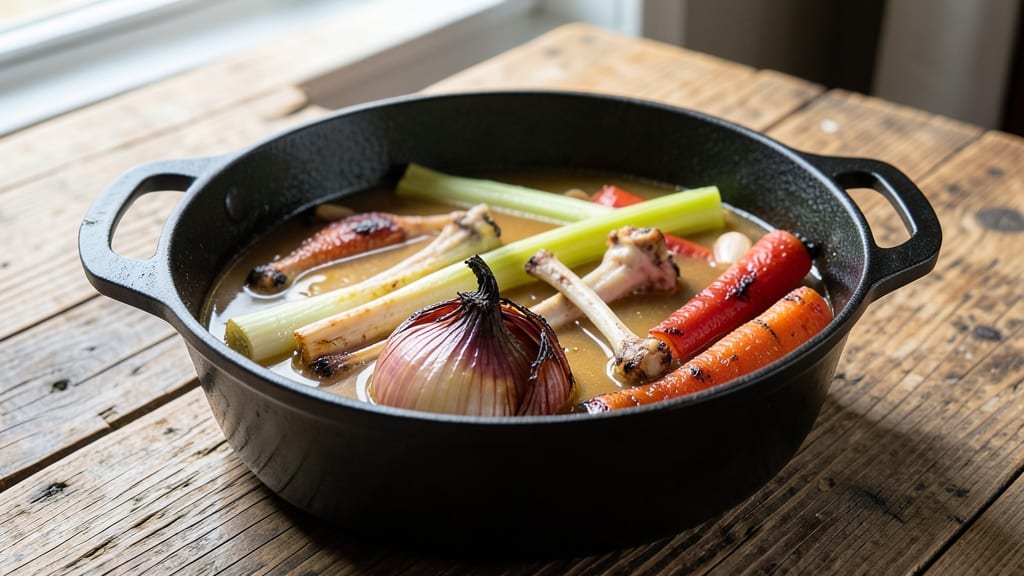
Creating a master stock is the secret weapon every home cook needs to transform ordinary sauces into restaurant-quality masterpieces.
Standing on a step stool in my grandmother’s kitchen in Sicily, I learned how a simple simmered base could elevate everything from pasta to braised meats—this is that foundation, perfected for your pantry.
The key lies in slow extraction of deep flavors, which we’ll clarify for maximum clarity and shelf stability.
This isn’t your basic stock—it’s a concentrated flavor bomb designed to work in sauces, braises, and even soups with just a splash. We’ll use a combination of bones (or vegetables for vegetarian versions) and aromatic vegetables, simmered low and slow to extract every layer of umami.
The clarification process removes impurities, leaving you with a crystal-clear liquid that stores beautifully for months, ready to transform any dish.
What you’ll end up with is a pantry essential that replaces store-bought broths entirely—richer, more complex, and packed with depth. A few tablespoons in your bolognese or risotto will make all the difference, while its versatility extends to everything from gravies to marinades.
No more dull, watery bases—just pure, professional-level flavor waiting to be unlocked.
Ready to build your flavor foundation? This master stock will become the backbone of your cooking, saving you time and money while delivering results that taste homemade. Let’s get started—your pantry (and taste buds) will thank you.
Ingredients for master stock
Nine aromatic ingredients plus a splash of wine create this restaurant-quality master stock.
| Ingredient | Amount | Notes |
|---|---|---|
| Chicken Bones 🍗 | 4 lb | Raw, with meat attached |
| Vegetable Scraps 🥕 | 2 cups | Onion peels, carrot tops, celery ends |
| Yellow Onion 🧅 | 1 whole | Peeled, halved, charred for depth |
| Carrots 🥕 | 2 whole | Peeled, roughly chopped |
| Celery Stalks 🥬 | 3 whole | Trimmed, roughly chopped |
| Garlic Cloves 🧄 | 6 cloves | Peeled, smashed |
| Fresh Parsley 🌿 | ½ cup | Stems included, chopped |
| Fresh Thyme 🌿 | 1 tbsp | Stems removed, chopped |
| Bay Leaves 🍃 | 2 whole | Dried, standard size |
| Black Peppercorns 🌶️ | 1 tbsp | Crushed, not ground |
| White Wine 🍷 | 1 cup | Dry, good quality |
| Egg Whites 🥚 | 4 large | Fresh, room temperature |
| Salt 🧂 | 1 tsp | Diamond Crystal preferred |
| Lemon Juice 🍋 | 1 tbsp | Freshly squeezed |
The bones are everything here—chicken backs or necks work best for maximum flavor. Costco or your local butcher usually has them in bulk, and they're cheaper than you'd think. If you're vegetarian, swap in mushroom stems or soy sauce for umami depth. The charred onion adds a smoky note that elevates everything—don't skip this step. For the herbs, fresh is non-negotiable—dried will work in a pinch, but the flavor won't be as bright. Buy organic if possible, especially for the parsley, since you'll be using the stems too. The wine should be something you'd drink—Sauvignon Blanc or Pinot Grigio work perfectly.
No white wine? Substitute apple cider vinegar or extra lemon juice—just add an extra tablespoon. Running low on thyme? Dried thyme at half the amount gets you close, but fresh is worth the extra trip to the store. The egg whites are crucial for clarification—room temperature is key—so don't pull them straight from the fridge. For the vegetables, any scraps work, but save the tough outer layers of onions and celery for maximum flavor. If you're making a big batch, double the herbs and wine—they're the flavor anchors. The lemon juice at the end brightens everything, so use freshly squeezed if you can.
This stock keeps for up to 6 months in the freezer or 2 weeks in the fridge once clarified. I like to portion it into ice cube trays—just pop out what you need for sauces or soups. For extra clarity, strain through a cheesecloth-lined sieve after simmering. The clarified version has a longer shelf life and looks stunning in dishes. If you're not using it all at once, freeze in glass jars with an inch of headspace—liquids expand when frozen. A splash in your risotto or braise will make it taste like you've been cooking all day.
Why You'll Love This Recipe
- Zero-Waste Magic: I swear by this trick—every veggie peel, onion end, and chicken bone gets used instead of tossed. Honestly, it’s the only way I cook now; my trash can stays empty, and my stockpot never does.
- Deep Umami Bomb: That slow-simmered chicken bone? Pure flavor gold. The onions caramelize just enough, the carrots and celery melt into the broth, and suddenly—chef’s kiss—your soup, stew, or rice has this rich, savory depth you can’t buy in a carton.
- Meal Prep MVP: Freeze it in ice cube trays for instant flavor boosts later. I keep a stash in my freezer for lazy nights when I need to turn rice into a full meal or rescue a bland pot of beans. It’s my secret weapon for effortless dinners.
- Budget Game-Changer: Chicken bones and veggie scraps are practically free if you ask the butcher or save your own. I’ve spent less than $5 for a gallon of stock that feeds my family for weeks—no fancy ingredients, just pure, honest flavor on a shoestring.
Step-by-step instructions for master stock recipe
This method transforms humble scraps into a rich, flavorful foundation for every sauce you'll ever make.
Prepare and Char the Vegetables
Begin by preheating your oven to 400°F. Cut the 1 whole yellow onion in half and place it on a baking sheet, cut-side down. Roast for 20-25 minutes until deeply charred and caramelized—this develops intense sweetness and depth. While it chars, peel and roughly chop the 2 whole carrots and 3 whole celery stalks into ½-inch pieces. You'll also want to trim and roughly chop the 2 cups vegetable scraps (onion peels, carrot tops, celery ends) to similar size.
Here's the thing—charred vegetables add complexity that raw ones can't match. The deeper the color, the more flavor you'll extract. Set aside the charred onion halves for later use in the stock. The chopped vegetables will go directly into your stockpot, so don't worry about perfect uniformity—they'll break down during cooking.
Build the Stock Base in the Pot
In a large stockpot, combine the 4 lb chicken bones, chopped vegetables, 6 cloves garlic cloves (smashed), 2 whole bay leaves, 1 tbsp crushed black peppercorns, and 1 tsp salt. Add 8 cups cold water (enough to cover everything by about 1 inch) and bring to a boil over medium-high heat. Once boiling vigorously, reduce heat to medium-low and maintain a gentle simmer.
This is where patience pays off. You want to see small bubbles breaking the surface consistently, but never a rolling boil. If you see foam forming, skim it off with a ladle—this prevents cloudiness in your finished stock. The reason we start with cold water is to prevent the bones from boiling too rapidly, which can make them tough and difficult to extract flavor from.
Simmer and Develop Flavor
Simmer uncovered for 3-4 hours, maintaining that gentle bubble. About 1 hour into cooking, add the charred onion halves and the 1 cup white wine. This timing ensures the wine's acidity brightens the stock without overpowering it. After 2 hours, add the 0.5 cup fresh parsley (stems included) and 1 tbsp fresh thyme—these herbs infuse delicate, fresh notes that elevate the stock.
Real talk: This is the moment that matters. The longer you simmer, the deeper the flavor becomes. I've found that 4 hours gives the perfect balance of richness without bitterness. If you smell something amazing wafting from your kitchen, that's a good sign—you're building layers of flavor that will make every sauce you make taste professional.
Strain and Clarify the Stock
After simmering, remove the pot from heat and let it sit for 10 minutes. Line a large colander with cheesecloth or a fine-mesh strainer and place it over a large bowl. Carefully ladle the stock through the cheesecloth, pressing gently on the solids to extract all the flavor—this is where you capture those precious aromatics. Discard the solids in the strainer.
For clarification, whisk together the 4 large egg whites in a bowl until frothy. Slowly pour the strained stock into the egg whites while whisking constantly. The egg whites will coagulate and trap impurities, creating a clear, golden stock. Transfer this mixture back to the pot and let it sit at room temperature for 15 minutes. Then gently reheat over low heat until warm—don't let it boil.
Finish and Store Properly
Strain the stock through a fine-mesh sieve into a clean pot, pressing gently on the egg white curds to extract every last drop of flavor. Stir in the 1 tbsp lemon juice—this brightens the stock and balances any richness. Taste and adjust seasoning with additional salt if needed. The stock should be rich, flavorful, and slightly sweet with a hint of acidity.
Let the stock cool to room temperature, then transfer it to airtight containers, leaving about ½ inch of headspace at the top. Store in the refrigerator for up to 5 days or freeze for up to 3 months. The beauty of this stock is that it becomes even more concentrated in flavor as it reduces—perfect for building sauces, braising meats, or enhancing soups.
Pro Tips For Making Master Stock
- Roast the Bones First: I learned this the hard way—raw chicken bones in cold broth make for a long, flavorless simmer. Toss them on a sheet pan at 400°F for 20-30 minutes until they’re golden and crispy. That caramelization? It’s the foundation of depth in your stock.
- Char the Veggie Base: Skip the gentle sauté—you need color. Cook your onion, carrots, and celery in a dry pot over medium-high heat until the onions turn deep amber and the carrots start to blacken in spots. This isn’t about burning; it’s about developing the Maillard reaction, which turns bland scraps into flavor bombs.
- Strain Twice, Strain Right: One pass through a fine-mesh strainer leaves behind gritty bits you’ll regret later. After the first strain, press the solids with a wooden spoon to extract every last drop of flavor, then run the liquid through a cheesecloth-lined sieve for that silky, restaurant-quality finish.
- Add Acid at the End: Your stock will taste flat if you skip this. Stir in 1 tablespoon of apple cider vinegar or lemon juice during the last 10 minutes of simmering. It brightens the flavor without overpowering—trust me, your future risotto will thank you.
Regional styles of this dish
Italian Grandmother Style
My Nonna used to make a version of this stock with chicken carcasses and a splash of dry white wine—just like we do here. The key difference? She'd add a few sprigs of rosemary and a bay leaf wrapped in cheesecloth to avoid bitterness.
In Sicily, they'd use local olive oil drizzled in at the end for extra richness, but I find the lemon juice works just as well for brightness. The Italians believe in slow simmering—sometimes overnight—to extract every ounce of flavor from the bones. 🌿
French Clarified Approach
French chefs take clarification to the next level by using a raft method with egg whites. Instead of whisking, they float the egg whites on top of the hot stock, letting them coagulate naturally. This creates a crystal-clear broth perfect for sauces like velouté or béchamel.
The French also insist on using bone marrow from the chicken bones for extra depth—if you have access to it, add 1 tbsp when simmering. Their version often includes a pinch of sugar to caramelize the aromatics slightly. 🥖
American Comfort Twist
In American kitchens, we often add a dash of Worcestershire sauce or soy sauce for umami depth—especially in vegetarian versions. Some Southern cooks even include a smoked paprika or liquid smoke for a subtle smoky note that pairs perfectly with barbecue sauces.
The American approach also tends to be more generous with herbs—think extra thyme and parsley—and sometimes finishes with a splash of bourbon instead of wine for a different depth of flavor. 🍖
Vegetarian Umami Boost
For a vegetarian master stock, swap the chicken bones for mushroom stems, soy sauce, or miso paste—I like using 2 tbsp white miso dissolved in the simmering liquid for instant umami. Add seaweed flakes or kelp granules for a briny depth that mimics meaty stock.
Some cooks also include roasted garlic and smoked paprika to enhance complexity. This version works beautifully in vegetarian bolognese or mushroom risotto. 🌱
Japanese Dashi Fusion
Inspired by Japanese dashi, you can create a hybrid master stock by adding 1 tbsp kombu (dried kelp) and 1 bonito flake (optional) to the simmering liquid. The kombu adds a subtle oceanic sweetness, while the bonito brings a delicate fishy note.
This fusion works wonderfully in Asian-inspired sauces or as a base for miso soup. The Japanese method emphasizes gentle simmering to preserve the natural flavors—never let it boil. 🍜
Spanish Sofrito Base
Spanish cooks often build their master stocks with tomato paste, smoked paprika, and a touch of sherry instead of wine. The result is a deep, slightly sweet stock perfect for paella or sofrito-based dishes.
Add 1 tbsp tomato paste at the beginning of simmering and ½ cup sherry in the last hour. The Spanish also love to include roasted red peppers for a smoky-sweet dimension. This version is a game-changer for any Mediterranean-inspired cooking. 🍅
Nutrition facts
Frequently asked questions
What makes this master stock different from regular broth?
This master stock is concentrated and clarified, meaning it's more flavorful and stable for long-term storage. The clarification process removes impurities, giving it a crystal-clear appearance and longer shelf life. Regular broth is typically unclarified and less concentrated, making it ideal for immediate use but not for long-term storage or sauce-building.
Can I make a vegetarian version of this master stock?
Swap the chicken bones for mushroom stems, soy sauce, or miso paste for umami depth. Add seaweed flakes or kelp granules to mimic the briny quality of meaty stock. This vegetarian version works beautifully in risottos, bolognese, or as a base for mushroom sauces.
How do I store and use this master stock?
Store in airtight containers with ½ inch headspace—it keeps for 5 days in the fridge or 3 months in the freezer. For easy use, freeze in ice cube trays and pop out what you need for sauces or soups. A splash in risotto or braise elevates flavors instantly, while reducing it creates a rich sauce base.
What if my stock turns cloudy during clarification?
Cloudiness often happens if the egg whites weren't whisked properly or if the stock wasn't strained enough. To fix it, strain through a cheesecloth-lined sieve again, then reheat gently. If needed, whisk in another egg white and clarify again. Avoid boiling—the heat can break down the proteins causing cloudiness.
Can I use this stock in place of water for cooking grains?
Yes! Use it as a 1:1 substitute for water when cooking rice, quinoa, or pasta. The rich flavor infuses the grains beautifully, especially in dishes like risotto or pilaf. For extra depth, add a splash of the stock when the grains are nearly done cooking. This works particularly well with Arborio rice for creamy risotto.