Desserts
This old-fashioned yellow cake recipe delivers the kind of tender, moist crumb that reminds you why homemade dessert beats boxed mixes every time.
The secret lies in buttermilk and a precise balance of ingredients—no shortcuts, just classic technique that creates a cake with a fine, even crumb and just the right amount of vanilla warmth.
I've baked this recipe for decades, and it never fails to impress, whether served plain with whipped cream or topped with rich chocolate frosting.
The foundation of this cake is simple but precise: all-purpose flour, granulated sugar, eggs, butter, and baking powder work together to create a light yet sturdy structure. Buttermilk adds moisture and a subtle tang that keeps the cake tender for days, while vanilla extract infuses that signature old-fashioned flavor.
The recipe calls for a single baking powder, not double-acting, which ensures even rising and a uniform texture throughout.
What you'll end up with is a cake that stays moist for three days when wrapped properly, with a delicate crumb that melts in your mouth. The golden-brown top gives way to a tender interior that's neither dry nor overly sweet—just perfectly balanced.
This is the kind of cake that makes you want to bake it again and again, whether for birthdays, holidays, or just because Sunday mornings deserve something special.
Serve it warm with a dusting of powdered sugar, or layer it with homemade vanilla buttercream for a showstopping dessert. The beauty of this recipe is its versatility—it works for any occasion, yet feels like a comforting tradition every time you pull it from the oven. Let's get baking!
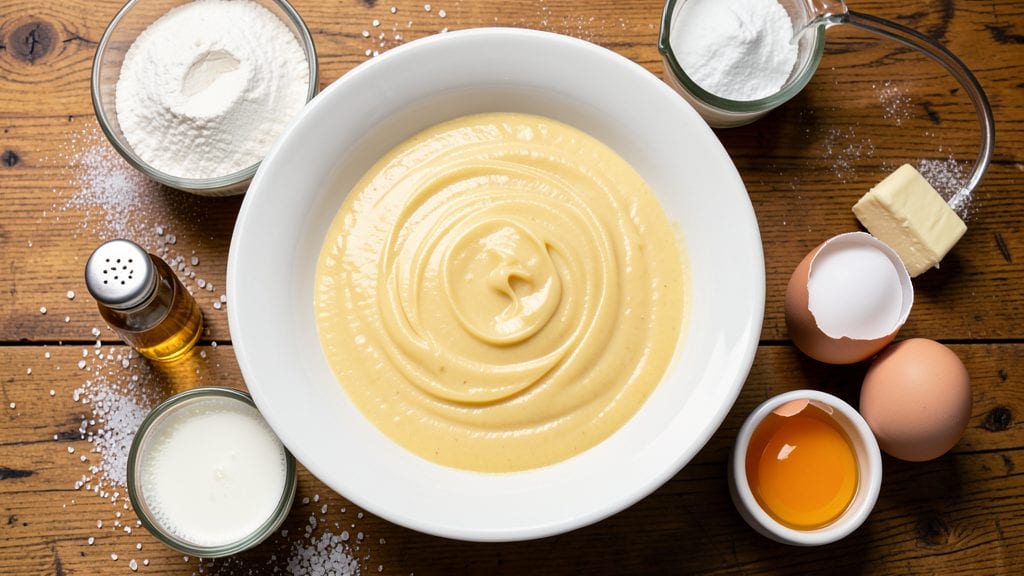
Ingredients for old fashioned yellow cake
Twelve classic ingredients for a cake that stays moist for days—no shortcuts, just tradition.
| Ingredient | Amount | Notes |
|---|---|---|
| All-Purpose Flour 🌾 | 3 cups | Sifted for even texture |
| Granulated Sugar 🍚 | 2 cups | White sugar preferred |
| Unsalted Butter 🧈 | 1 cup | Room temperature, full-fat |
| Large Eggs 🥚 | 4 whole | Room temperature for best mixing |
| Buttermilk 🥛 | 1 cup | Fresh, not powdered |
| Pure Vanilla Extract 🍯 | 2 tsp | High-quality bourbon-based |
| Single-Acting Baking Powder 🍞 | 2 tsp | Not double-acting |
| Salt 🧂 | ½ tsp | Fine sea salt |
| Vegetable Oil 🫒 | ¼ cup | Light, neutral flavor |
The butter matters here. Full-fat unsalted butter creates that signature richness, so don't substitute margarine or low-fat versions. Room temperature is key—press it between paper towels for 10 minutes if it's too cold. For the flour, King Arthur or Gold Medal brands sift beautifully, but any all-purpose will work if you take the time to sift it yourself. The buttermilk? Fresh is non-negotiable—powdered or evaporated won't give that same tender crumb. If you're short on time, mix 1 tablespoon lemon juice or vinegar with 1 cup milk as a substitute, but let it sit for 5 minutes to curdle properly.
No vegetable oil? Melted butter works in a pinch, but it'll add more richness. Short on vanilla? Vanilla bean paste gives deeper flavor, but pure extract is fine. The baking powder is critical—single-acting only ensures even rising. If you accidentally grab double-acting, reduce to 1.5 teaspoons. For the sugar, turbinado or raw sugar adds subtle depth, but white sugar keeps the classic yellow hue. The eggs should be at room temperature—cold eggs can cause the batter to curdle. If you're baking in a high-altitude area, add 1.5 teaspoons extra baking powder.
This batter keeps for 2 days in the fridge, covered tightly. For longer storage, freeze the batter in an airtight container for up to 3 months. Once baked, the cake stays moist for 3 days when wrapped in plastic. Slice and freeze individual portions for up to 2 months. The golden-brown top? That's from broiling for 1 minute at the end—don't skip it. For serving, dust with powdered sugar or layer with vanilla buttercream. The cake reheats beautifully—wrap a slice in foil and warm in a 300°F oven for 5 minutes.
Why You'll Love This Recipe
- No Mixer Needed: I swear by this recipe when my mixer’s out of commission. Cream butter and sugar by hand—it’s more work than you’d think, but the tender crumb makes it worth it. (Yes, even on a Tuesday night.)
- Buttermilk Magic: That tangy buttermilk? It’s the secret weapon. It keeps the cake moist for days without tasting like anything but pure, simple happiness. Honestly, I’ve tried other recipes—this one wins every time.
- Layering Heaven: From birthday celebrations to Sunday dinners, this cake handles it all. Frost it, fill it, or serve it plain—it’s the blank canvas I always reach for. (My kids’ favorite? The one with just whipped cream and a sprinkle of cinnamon.)
- Budget-Friendly Staples: Flour, sugar, butter—these are the basics I already have. No specialty ingredients, no markup. It’s the kind of recipe that stretches my grocery budget while still feeling special. (And leftovers? They disappear just as fast.)
Step-by-step instructions for old fashioned yellow cake
Here's the method for a cake that stays moist for days—thanks to buttermilk and oil working together.
Cream Butter and Sugar Until Light and Fluffy
In a large mixing bowl, combine the 1 cup unsalted butter and 2 cups granulated sugar. Using an electric mixer on medium speed, beat for 3-5 minutes until the mixture is light in color and has nearly doubled in volume. You'll see ribbons form when you lift the beaters—this means you've incorporated enough air for a tender crumb.
Here's the thing—room temperature butter is critical. If it's too cold, the mixture won't emulsify properly and your cake will be dense. Press your finger into the butter; if it leaves a slight indent but doesn't feel greasy, it's ready. If it's too soft, chill it for 15 minutes before starting. The sugar helps cut the butter into tiny particles, creating a smooth base for the rest of your ingredients.
Add Eggs and Vanilla Extract
Add the 4 whole large eggs, one at a time, mixing well after each addition on low speed. This gradual incorporation prevents the eggs from breaking and ensures even distribution. After the last egg, add the 2 teaspoons pure vanilla extract and mix for 30 seconds until fully combined.
I like to let the eggs come to room temperature first—this prevents the butter mixture from seizing up. You'll know the eggs are ready when they're slightly warm to the touch. The vanilla extract should be high-quality bourbon-based; imitation extracts often have a chemical aftertaste that can overpower the delicate cake flavor. Mix just until combined—overmixing here can incorporate too much air, which might cause the cake to collapse later.
Combine Dry Ingredients Separately
In a medium bowl, whisk together the 3 cups all-purpose flour, 2 teaspoons single-acting baking powder, and 0.5 teaspoon salt. Sift the flour through a fine-mesh sieve directly into the bowl to aerate it and prevent lumps. This step is crucial for a light, even texture—those little air pockets help create the classic yellow cake crumb.
Don't skip sifting the flour, even if it looks powdery. The baking powder needs to be evenly distributed throughout the batter to ensure proper rise. I like to use a rubber spatula to gently fold the dry ingredients together, breaking up any small clumps that might have formed during sifting. The baking powder is single-acting, meaning it reacts with liquid when mixed—this is why we wait to combine it until the very end.
Alternate Adding Buttermilk and Oil
With the mixer on low speed, add half of the 1 cup buttermilk and mix just until combined. Then add half of the 0.25 cup vegetable oil and mix again. Repeat this process, alternating between buttermilk and oil, ending with the buttermilk. The oil helps create a tender crumb while the buttermilk adds moisture and a subtle tang that balances the sweetness.
Here's the secret to that classic moist texture: the combination of buttermilk and oil. The buttermilk's acidity helps activate the baking powder, while the oil coats the flour proteins, preventing them from absorbing too much liquid and creating a dry cake. Mix just until the ingredients are combined—you should still see small streaks of flour. Overmixing at this stage develops gluten, which makes the cake tough.
Fold in Dry Ingredients and Prepare for Baking
Using a spatula, gently fold the dry ingredients into the wet mixture until just combined. Be careful not to overmix—you're looking for a smooth batter with no visible flour streaks. The batter should be thick but pourable. If it's too thick, you can gently stir in 1-2 tablespoons of milk (though you shouldn't need to with these exact measurements).
Pour the batter into two 9-inch round cake pans that have been lightly greased with butter and floured. Tap the pans gently on the counter to remove any air bubbles that might have formed. Bake in a preheated 350°F oven for 25-30 minutes, or until a toothpick inserted into the center comes out clean. The cake should spring back slightly when pressed in the center—this is your signal that it's done.
Cool and Check for Moisture
Remove the cakes from the oven and let them cool in the pans for 10 minutes. Then transfer them to a wire rack to cool completely. The cooling process is important—it allows the cakes to set properly and prevents them from becoming gummy. If you cut into the cake too soon, the steam inside can make it soggy.
For maximum moisture, I recommend wrapping the cooled cakes in plastic wrap and storing them at room temperature for up to 3 days. The buttermilk and oil combination keeps them tender and moist longer than traditional recipes. If you're making this ahead of time, this is the best way to preserve that classic old-fashioned texture. Slice and serve with your favorite frosting or whipped cream—just be sure to let it sit at room temperature for 10 minutes before serving for the best texture.
Pro Tips For Making Old Fashioned Yellow Cake
- Whisk Butter & Sugar: DESCRIPTION: Cream them for 5 full minutes until the mixture turns pale and fluffy—like pudding, not wet sand. I used to rush this, and the cake ended up dense. The butter needs time to fully emulsify with the sugar for that classic tender crumb.
- Measure Buttermilk Precisely: DESCRIPTION: Use 1 cup buttermilk + 1 tablespoon lemon juice or vinegar, then let it sit for 10 minutes to curdle properly. Store-bought buttermilk varies in acidity—this guarantees consistency. No curdling? Your cake might taste flat or gummy.
- Check Doneness at 325°F: DESCRIPTION: Bake at 325°F (not 350°F)—this is non-negotiable for old-fashioned cakes. They need steady, gentle heat to rise evenly. After 30 minutes, test with a toothpick: it should come out with moist crumbs, not wet batter. Overbaking is the enemy of that perfect crumb.
- Sift Flour Twice: DESCRIPTION: Dump the flour into a sieve and shake it once before mixing, then sift it again after adding dry ingredients. This cuts out lumps and aerates the batter for a lighter texture. Lazy sifting = dense cake. (Yes, even if you’re impatient like me.)
Best sauces and condiments for this recipe
Classic Vanilla Buttercream
This is my go-to pairing for this cake—simple, rich, and perfectly balanced. Whip 1 cup unsalted butter (room temperature) with 4 cups powdered sugar, 2 tablespoons vanilla extract, and 2-3 tablespoons heavy cream until light and fluffy.
Spread between layers or frost the top with a smooth finish. For extra flair, dust with powdered sugar or sprinkle with toasted coconut flakes. 🍰
Lemon Curd Filling
Bright citrus cuts through the cake's richness beautifully. Make a quick lemon curd by simmering ½ cup lemon juice, ½ cup sugar, 3 egg yolks, and ¼ cup butter until thickened.
Spread between layers for a tangy contrast. I like to add a pinch of salt to enhance the lemon flavor. Serve with fresh berries for a springtime twist.
Chocolate Ganache Drizzle
For chocolate lovers, a dark chocolate ganache elevates this cake to restaurant quality. Melt 1 cup heavy cream with 8 oz dark chocolate (60-70% cacao), then let it cool slightly before drizzling over the cake.
Add crushed hazelnuts or sea salt flakes for texture. The bitterness of dark chocolate balances the cake's sweetness perfectly.
Spiced Whipped Cream
Whipped cream gets an upgrade with warm spices. Fold 1 teaspoon cinnamon and ¼ teaspoon nutmeg into 2 cups heavy whipping cream> before whipping to stiff peaks. Top the cake with dollops and a sprinkle of ground cinnamon. This pairing feels cozy and perfect for fall gatherings.
Maple Glaze Finish
A simple maple glaze adds a touch of elegance. Mix ½ cup powdered sugar with 2 tablespoons maple syrup and 1 tablespoon milk, then drizzle over the cake. The natural sweetness of maple complements the vanilla perfectly. Add chopped pecans for crunch and a Southern touch.
Nutrition facts
Frequently asked questions
Why does this recipe use single-acting baking powder instead of double-acting?
Single-acting baking powder releases gas only when mixed with liquid, creating a more controlled rise. This prevents the cake from collapsing during baking. Double-acting releases gas twice—when mixed and when heated—which can cause uneven texture. The classic texture relies on that precise, even lift.
Can I substitute buttermilk if I don't have any?
Yes! Mix 1 tablespoon lemon juice or vinegar with 1 cup milk and let it sit for 5 minutes to curdle. This mimics buttermilk's acidity, which tenderizes the cake. For best results, use fresh milk—not powdered. The tang is key to that signature moist texture.
How do I prevent my cake from cracking on top?
Overbaking is the usual culprit. Remove the cake from the oven when a toothpick comes out clean with just a few moist crumbs. Let it cool in the pan for 10 minutes before transferring to a rack. Avoid opening the oven door frequently during baking, as temperature fluctuations can cause cracks. A light broil for 1 minute at the end adds color without overcooking.
Why does this cake stay moist longer than other yellow cakes?
The combination of buttermilk and vegetable oil creates a tender crumb that resists drying out. Buttermilk's acidity keeps the structure delicate, while oil coats the flour proteins, locking in moisture. Wrapping the cooled cake in plastic wrap preserves freshness for 3 days—unlike many recipes that dry out within 24 hours.
Can I bake this in a different pan size?
For a single 9-inch round pan, reduce baking time by 5-7 minutes (check at 22 minutes). For a 9x13-inch pan, increase time by 5-10 minutes (check at 35 minutes). Adjust oven temperature to 340°F if using glass pans. Always use an oven thermometer—home ovens often run hot or cold.