
Main Courses
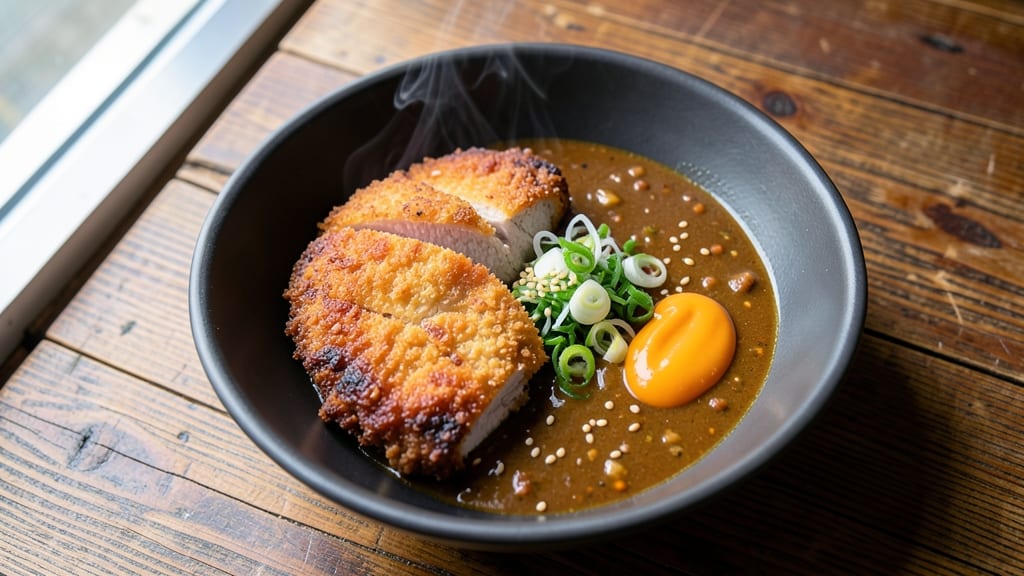
This tonkatsu curry recipe delivers the perfect balance of crispy breaded pork cutlets and deeply flavorful Japanese curry sauce in one satisfying meal. The secret lies in achieving a golden, shatteringly crispy cutlet with a tender interior, paired with a rich, umami-packed curry that coats every bite.
After years of perfecting this dish, I've developed a method that ensures restaurant-quality results at home with precise techniques and simple ingredients.
The process begins with preparing the tonkatsu cutlets—thinly pounded pork loin coated in seasoned panko breadcrumbs for maximum crispiness. While the cutlets fry to perfection in hot oil, we'll build the curry sauce from scratch using a classic Japanese roux technique.
This method creates a velvety, well-balanced sauce with just the right consistency—neither too thick nor too thin—to perfectly complement the crispy cutlets.
By the time you serve this dish, you'll have golden-brown tonkatsu with a crackling crust and juicy pork inside, paired with a vibrant curry sauce that's rich, slightly sweet, and packed with umami depth.
The combination of textures and flavors creates a meal that's both comforting and impressive, perfect for weeknight dinners or special occasions. Let's get started on creating this Japanese classic.
This recipe serves four and can be completed in about one hour, with most of that time dedicated to frying the cutlets and simmering the curry sauce. The results are worth every minute—crispy, tender, and deeply flavorful tonkatsu curry that will become a new family favorite.
The dish pairs beautifully with steamed white rice and simple garnishes like green onions or sesame seeds for an authentic touch.
Ingredients for tonkatsu curry
Simple yet precise ingredients transform into crispy tonkatsu and velvety curry sauce.
| Ingredient | Amount | Notes |
|---|---|---|
| Pork Loin 🥩 | 1 ½ lb | Center-cut, boneless, skinless |
| All-Purpose Flour 🌾 | ½ cup | For dredging, sifted |
| Japanese Panko Breadcrumbs 🍞 | 2 cups | High-quality, light panko |
| Large Eggs 🥚 | 2 whole | Room temperature, beaten |
| Vegetable Oil 🫒 | 3 cups | High smoke point, neutral flavor |
| Japanese Curry Block 🍲 | 1 whole | S&B Golden Curry preferred |
| Onion 🧅 | 1 whole | Yellow, finely diced |
| Garlic Cloves 🧄 | 4 cloves | Fresh, minced |
| Potato Starch 🥔 | 2 tbsp | For roux, light and fluffy |
| Chicken Stock 💧 | 1 cup | Homemade or quality store-bought |
| Worcestershire Sauce 🍶 | 1 tbsp | Japanese style preferred |
| Soy Sauce 🥫 | 1 tbsp | Japanese or light soy |
| Honey 🍯 | 1 tbsp | Pure, for balancing sweetness |
| Green Onions 🌱 | 2 whole | Thinly sliced, for garnish |
| Diamond Crystal Kosher Salt 🧂 | 1 tsp | For seasoning |
The pork loin must be center-cut for tenderness—avoid lean cuts that dry out during frying. Costco or high-end butchers carry ideal cuts, or ask for a well-marbled loin. Pound it to ¼-inch thickness for even cooking. For the Japanese panko, Matsuhisa or Kikkoman brands deliver the light, airy texture essential for crispiness. Regular breadcrumbs won't achieve the same shatteringly crisp crust. The curry block is non-negotiable—S&B Golden Curry provides that signature umami depth, though S&B Mild works for a milder profile.
No Japanese panko? Italian panko plus 1 tbsp cornstarch mimics the texture, but expect slightly less crispness. Substituting the curry block? 1 tbsp curry powder plus ½ tsp turmeric approximates the color and warmth, though it lacks the complex umami layers. For the roux, potato starch creates a silkier texture than flour—cornstarch works in a pinch but may taste slightly off. The Worcestershire sauce should be Japanese-style (like Hajime) for authentic depth; regular Worcestershire adds vinegar sharpness. Honey can be swapped for maple syrup or agave, though it alters the sauce's balance.
Prep the pork and breading mixture 1 hour ahead—this allows flavors to meld and prevents soggy cutlets. Store the curry sauce in an airtight container for up to 5 days in the fridge or 3 months frozen. Reheat gently over low heat, stirring constantly to prevent separation. The cutlets reheat best in a 350°F oven for 10 minutes to restore crispness. For serving, keep the sauce and cutlets separate until ready to plate—this preserves the perfect texture contrast.
Why You'll Love This Recipe
- Crispy in Minutes: I swear by that panko crust—just flour, egg, and breadcrumbs, fried until golden. No fancy techniques, just a hot pan and 5 minutes of your time. That crunch? Worth every second.
- Curry Comfort Bomb: The rich, slightly sweet curry sauce clings to the tonkatsu like it’s been waiting for it. One bite and you’ll understand why this is my go-to when I need something that feels like a hug in a bowl.
- Lunchbox Hero: Between us, this reheats like a dream—pack the leftovers, and it’s still crispy enough to fool anyone. My kids grab these for school lunches, and honestly? They never complain about my cooking again.
- Pork Powerhouse: A single pork loin stretches for four servings, and the cost? A fraction of takeout. That’s 20 bucks for a meal that tastes like you spent hours on it—because let’s be real, who has hours?
Step-by-step instructions for tonkatsu curry
Master this Japanese classic with perfectly crispy breading and velvety curry sauce.
Prepare the Pork Cutlets
Slice the 1.5 lb pork loin into 4 even cutlets, each about ½-inch thick. I use a sharp boning knife for clean cuts and press gently to even thickness—this ensures uniform cooking. Pat each cutlet dry with paper towels to remove any surface moisture, which is crucial for crispy breading. Season both sides generously with ½ teaspoon diamond crystal kosher salt per cutlet, focusing on the edges where flavor penetrates best.
Place the cutlets on a wire rack set over a plate in the refrigerator for 30 minutes to chill completely. Cold meat browns more evenly and prevents the breading from becoming soggy. While they chill, prepare your breading station: place 0.5 cup all-purpose flour in one shallow dish, beat the 2 whole large eggs in another, and spread the 2 cups japanese panko breadcrumbs on a third plate. This mise en place keeps everything organized during the frying process.
Create the Crispy Breading
Heat 3 cups vegetable oil in a deep skillet to 350°F—use a thermometer for accuracy. The oil should shimmer gently but not smoke. Working quickly, dredge each chilled pork cutlet in the 0.5 cup all-purpose flour, shaking off excess, then dip into the beaten 2 whole large eggs, allowing any excess to drip off. Finally, press the cutlet firmly into the 2 cups japanese panko breadcrumbs, coating all sides evenly. This triple-layer technique creates that signature crispy, lacy crust.
Carefully lower the breaded cutlets into the hot oil, working in batches to avoid overcrowding. Fry for 3-4 minutes per side until golden brown with deep coloration—this indicates proper crisping. Transfer to a paper towel-lined plate to drain excess oil. The internal temperature should reach 145°F when checked with a meat thermometer. If the breading loses crispness while waiting, return briefly to the oven at 200°F for 2 minutes to restore crunch.
Build the Umami-Packed Curry Sauce
In a separate deep skillet or pot, heat 1 tablespoon vegetable oil over medium heat. Add the 1 whole finely diced onion and 4 cloves minced garlic cloves, cooking for 5-6 minutes until the onions soften and turn translucent. Stir in the 1 whole japanese curry block, broken into pieces, and toast for 1 minute to deepen the flavors. Add 2 tablespoons potato starch, whisking constantly for 2 minutes to create a light roux that will thicken the sauce.
Pour in 1 cup chicken stock, 1 tablespoon worcestershire sauce, 1 tablespoon soy sauce, and 1 tablespoon honey, stirring to combine. Bring to a gentle simmer, then reduce heat to low. Let the sauce thicken for 10-12 minutes, stirring occasionally, until it coats the back of a spoon. The sauce should be glossy with a smooth, velvety consistency—this indicates proper thickening. If it thickens too quickly, add 1-2 tablespoons water to adjust.
Combine and Finish
Return the crispy pork cutlets to the skillet with the curry sauce, spooning sauce over each piece. Cover and simmer on low heat for 5-7 minutes, allowing the flavors to meld. The cutlets will absorb some of the sauce, becoming tender and infused with umami. Remove from heat and garnish with 2 whole thinly sliced green onions, adding a fresh contrast to the rich sauce.
Serve immediately with steamed rice, allowing diners to spoon the curry sauce over the crispy pork. The contrast between the crunchy exterior and tender meat, paired with the aromatic, slightly sweet curry, creates a harmonious balance. For extra presentation, drizzle with additional sauce from the pot and sprinkle with extra green onions. This dish delivers restaurant-quality tonkatsu curry with a perfect crisp-to-tender ratio every time.
Pro Tips For Making Tonkatsu Curry
- FRIEZE THE PORK FIRST: Pat the pork loin dry, then pop it in the freezer for 20-30 minutes before breading. I used to skip this and ended up with uneven crusts—some parts soggy, others burnt. The cold meat holds up better under the weight of panko and eggs, so you’ll get that perfect golden shell every time.
- USE COLD EGGS ONLY: Crack the eggs into a bowl and refrigerate them for at least 30 minutes before dipping the pork. Warm eggs make the breading stick unevenly, and you’ll end up with clumps of panko sliding off. Trust me, this small step keeps your tonkatsu intact during frying.
- DOUBLE-FRY THE CUTLETS: First fry at 325°F (160°C) for 3-4 minutes to cook through, then crank the heat to 375°F (190°C) for the final 1-2 minutes to crisp the crust. I learned this the hard way—rushing the first fry makes the outside burn before the inside is done, and no one wants a rubbery tonkatsu.
- RESERVE THE CRUST: Save the first batch of panko breadcrumbs that fall off the pork while breading—mix them back in with fresh panko before the final coating. It’s not waste; it’s insurance for a thicker, stickier crust. (Yes, it looks messy, but your curry will thank you.)
Troubleshooting great tonkatsu curry
Oil Temperature Issues
If your oil isn't hot enough (350°F), the breading will absorb oil and become greasy instead of crispy. I use a ThermoWorks digital thermometer to monitor temperature—it's worth the investment.
If the oil smokes excessively, it's too hot; let it cool slightly before frying. For best results, maintain a steady 350°F throughout the process. 🌡️
Soggy Breading Fix
Cold meat is key—skip the chilling step, and your breading will steam instead of crisp. If your cutlets lose crispness while waiting, pop them in a 200°F oven for 2 minutes to restore crunch.
I also recommend frying in batches to avoid overcrowding, which lowers oil temperature and causes soggy results.
Curry Sauce Too Thick
If your sauce thickens too quickly, it's likely due to over-reducing or insufficient liquid. Add 1-2 tablespoons water while stirring constantly to adjust consistency. For a smoother texture, whisk in 1 tablespoon cornstarch mixed with 2 tablespoons water to thin it gradually.
The sauce should coat the back of a spoon but remain pourable. 🥄
Uneven Cooking
Pound your pork to ¼-inch thickness for even cooking—thicker sections will stay undercooked while thinner edges overcook. Use a meat mallet or rolling pin to ensure uniform thickness. If your cutlets brown unevenly, adjust heat distribution by moving the pan occasionally over the burner.
Curry Block Not Dissolving
Break the S&B Golden Curry block into small pieces before adding to the pot for even distribution. If it still doesn't dissolve, simmer the sauce uncovered for 5 extra minutes to help it break down completely. Avoid stirring vigorously, as this can create lumps—gentle heat works best. 🍲
Sauce Separating
Sauce separation usually happens when starch isn't incorporated properly. Whisk in 1 teaspoon cornstarch mixed with 1 tablespoon cold water while simmering to restore thickness. For prevention, ensure your roux is smooth before adding liquids, and stir constantly during the thickening process. Reheat gently on low heat if needed.
Nutrition facts
Frequently asked questions
Can I use chicken instead of pork for tonkatsu?
Yes, but chicken tonkatsu requires adjustments. Use 1 lb boneless, skinless chicken breast instead of pork, and pound it to ¼-inch thickness for even cooking. Chicken cooks faster, so fry for 2-3 minutes per side until golden. The texture will be slightly different but still delicious with the curry sauce.
How do I make the curry sauce less spicy?
Use S&B Mild Curry Block instead of Golden for a milder profile. If you're using a homemade roux, reduce the amount of curry powder by half or replace it with 1 tbsp mild curry powder plus ½ tsp turmeric. For extra sweetness, add an additional ½ tbsp honey to balance any heat.
Can I prepare the tonkatsu ahead of time?
Fry the cutlets and let them cool completely, then store in an airtight container at room temperature for up to 2 hours. For longer storage, refrigerate for 1 day or freeze for 1 month. Reheat in a 350°F oven for 10 minutes to restore crispiness. The curry sauce can be made 1 day ahead and reheated gently.
What's the secret to ultra-crispy tonkatsu?
Three keys: chill the meat before breading, use high-quality panko (like Matsuhisa), and maintain 350°F oil temperature. Double-dredge the cutlets—flour, egg, panko, then flour again—before the final panko coat. Fry in small batches to avoid lowering oil temperature, and keep the cutlets on a wire rack to prevent sogginess.
How do I serve tonkatsu curry traditionally?
Plate the crispy tonkatsu cutlets alongside steamed Japanese short-grain rice in individual bowls. Serve the curry sauce in a separate small bowl or ladle it over the cutlets at the table. Garnish with thinly sliced green onions and a sprinkle of sesame seeds. For authenticity, add a side of pickled vegetables or a simple miso soup.