Breakfast & Brunch
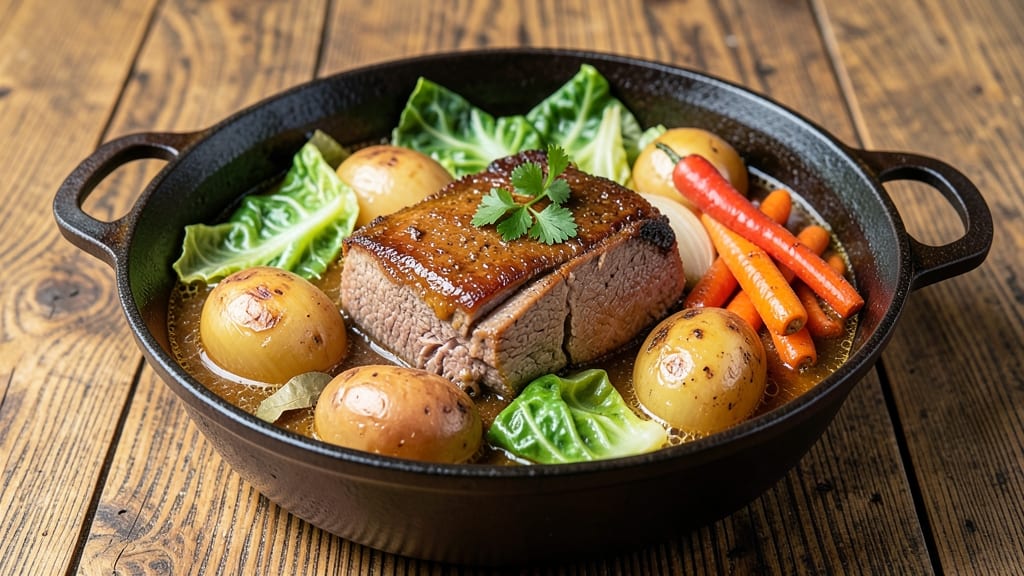
This New England boiled dinner recipe brings the hearty, comforting flavors of classic New England tradition to your table with perfectly slow-braised corned beef and tender vegetables. The secret lies in the slow-cooked broth that transforms tough cuts into melt-in-your-mouth perfection while keeping all the vegetables perfectly tender.
I've perfected this over years of family gatherings, ensuring every bite delivers that nostalgic, homey taste of New England kitchens.
The beauty of this recipe is its simplicity—just a few core ingredients that work together to create a meal rich in flavor and tradition. Corned beef, cabbage, carrots, and potatoes all cook together in a flavorful broth until they're fork-tender, absorbing all the savory goodness.
The key is patience; letting everything simmer for hours develops deep, complex flavors that you just can't rush. This is the kind of dish that tastes even better the next day, making it perfect for meal prep or feeding a crowd.
What you'll end up with is a steaming pot of slow-braised corned beef that's so tender it practically falls apart, surrounded by perfectly cooked vegetables in a rich, aromatic broth. The cabbage becomes sweet and tender, the carrots caramelize slightly, and the potatoes absorb all the savory flavors.
This is comfort food at its finest—warm, hearty, and full of the kind of flavors that make you feel like you're sitting at a New England table, even if you're miles away.
Serve with classic sides like mustard sauce or pickled beets to complete the meal, or enjoy it as-is with crusty bread to soak up every last drop of that flavorful broth.
This recipe is designed to be both traditional and adaptable, so feel free to add your own modern twists while keeping the soul of New England cooking intact. Let's get cooking!
Ingredients for best new england boiled dinner
Just six core ingredients transform into a legendary New England boiled dinner.
| Ingredient | Amount | Notes |
|---|---|---|
| Corned Beef Brisket 🥩 | 3 lb | Pre-cured, thick-cut preferred |
| Green Cabbage 🥬 | 1 whole | Heads cut into 8 wedges |
| Russet Potatoes 🥔 | 2 lb | Medium-sized, halved lengthwise |
| Carrots 🥕 | 1 ½ lb | Whole, scrubbed, peeled optional |
| Yellow Onions 🧅 | 2 whole | Quartered, skins on |
| Bay Leaves 🌿 | 2 whole | Dried, standard size |
| Salt 🧂 | 2 tbsp | Kosher or sea salt |
| Black Peppercorns 🌶️ | 1 tbsp | Crushed lightly |
| Allspice Berries 🌶️ | 1 tsp | Crushed slightly |
| Mustard Seeds 🌶️ | 1 tsp | Whole, not ground |
| Water 💧 | 8 cups | Cold, tap or filtered |
| Fresh Parsley 🌿 | ¼ cup | Chopped, for garnish |
The corned beef is the star—look for brisket cuts at Whole Foods or your local butcher for the best texture. Pre-cured brisket (like Hormel or Reuben brand) saves time, but if you're feeling traditional, grab a whole brisket and ask them to cure it in-house. The cabbage should be firm and heavy—avoid those wilted heads at the grocery store. For the potatoes, Russets hold up best to long cooking, but Yukon Golds add a buttery touch. Carrots can be baby carrots if that's what's in the fridge, but whole carrots caramelize better. Costco often has bulk carrots at a great price.
No bay leaves? Dried thyme at half the amount works in a pinch. Short on allspice? Cinnamon sticks or ground allspice both add warmth. The mustard seeds are non-negotiable for that classic tang—don't skip them. For the water, filtered is ideal, but tap water works fine if you're in a soft-water area. The parsley is just for garnish, but I always grab extra—half goes on the table, half gets tossed into the broth at the end for brightness. Pre-cured beef? Check the label—some brands include spices, so adjust accordingly.
This tastes even better the next day—plan ahead and make a double batch. The broth keeps for 5 days in the fridge, and the meat reheats beautifully. I portion everything into containers so lunches are sorted for the week. The vegetables stay tender for 3 days in the fridge, but the meat keeps for 4 days if stored separately. Freeze the broth without the meat for up to 6 months—just thaw and reheat when ready.
Why You'll Love This Recipe
- One-Pot Magic: I swear by this—just toss everything in a pot (no fancy prep) and let it simmer. The corned beef brisket practically cooks itself, while the potatoes and carrots soften into perfect bite-sized pieces without falling apart.
- Salty-Sweet Symphony: That brisket? Chef’s kiss. The corned beef’s deep, peppery flavor soaks into the cabbage and potatoes, while the onions caramelize just enough to add a touch of sweetness. It’s the kind of dish where every bite feels like a hug—savory, rich, and just a little bit homey.
- Leftovers for Days: Honestly, I make this twice a month because the leftovers are that good. Cold slices of brisket on rye the next day? Yes. Reheated with a sprinkle of mustard? Even better. It’s the ultimate meal that gives back—no sad, dry reheats here.
- Budget Crowd-Pleaser: Between us, this is my go-to for game day, family dinners, or when my college-aged kids bring friends over. A big pot feeds eight for under $20, and everyone leaves happy—no one fights over the last slice of brisket, either. (Yes, even on a Tuesday night.)
Step-by-step instructions for New England boiled dinner
Here's how to create a hearty, slow-braised feast that brings classic New England comfort to your table.
Prepare the Corned Beef Brisket
Rinse the 3 lb corned beef brisket thoroughly under cold water to remove excess salt. Pat it completely dry with paper towels—this helps the meat absorb flavors better during cooking. Place the brisket in a large, heavy pot that's deep enough to accommodate all the vegetables and still have room for water.
Add the 2 whole bay leaves, 1 tsp crushed allspice berries, and 1 tsp whole mustard seeds to the pot. These aromatic spices will infuse the meat and broth with deep, warming flavors. Pour in the 8 cups cold water, making sure the brisket is completely submerged. Bring to a boil over high heat, then immediately reduce to a gentle simmer.
Simmer the Corned Beef
Cover the pot and let the brisket simmer gently for 2 hours. You'll know it's ready when the meat is fork-tender and pulls apart easily. I like to check at the 1-hour mark—if the meat still feels firm, give it another 30 minutes. The liquid should reduce slightly but remain flavorful.
Here's the thing—don't peek or lift the lid during cooking. Every time you do, you lose heat and extend the cooking time. Instead, trust the process and let the meat cook undisturbed. The brisket should develop a rich, pink interior with a tender texture that practically melts in your mouth.
Prepare the Vegetables
While the brisket simmers, cut the 1 whole green cabbage into 8 wedges, leaving the core intact to hold the leaves together. Peel and halve the 2 lb russet potatoes lengthwise. Scrub the 1.5 lb carrots but leave them whole—peeling is optional, but scrubbing removes dirt without losing nutrients. Quarter the 2 whole yellow onions, leaving the skins on for added flavor.
Lightly crush the 1 tbsp black peppercorns and 2 tbsp salt between your palms—this releases their aromatic oils. Add these to the pot with the vegetables once the brisket is tender. The vegetables will cook quickly in the hot broth, absorbing all the rich flavors from the meat and spices.
Combine and Braise
Carefully remove the brisket from the pot and set it aside on a plate. Add the prepared vegetables to the simmering broth, making sure they're fully submerged. Return the brisket to the pot, positioning it on top of the vegetables. Cover and simmer for 30-40 minutes until the potatoes are tender when pierced with a fork and the carrots are fork-tender.
You'll know the vegetables are done when they're easily pierced with a fork and their edges begin to soften. The cabbage should be tender but still hold its shape slightly, while the potatoes should be creamy inside with a slight resistance at the edges. The onions should be translucent and easily pierced with a fork.
Rest and Serve
Remove the pot from heat and let the entire dinner rest, covered, for 10-15 minutes. This resting period allows the juices to redistribute throughout the meat and vegetables, ensuring every bite is moist and flavorful. During this time, chop the 0.25 cup fresh parsley for garnish.
To serve, carefully transfer the brisket to a cutting board and slice it against the grain into ½-inch thick slices. Spoon the vegetables and broth into a large serving dish, arranging the brisket slices on top. Garnish with the chopped parsley and serve immediately with crusty bread or buttery mashed potatoes. The result is a deeply satisfying, aromatic meal that captures the essence of New England tradition.
Pro Tips For Making Best New England Boiled Dinner
- Parboil the Potatoes First: Toss the russets into boiling water for 5 minutes before adding everything else—this guarantees they’ll finish tender without turning to mush. I learned this the hard way when my potatoes dissolved into the broth like overcooked pasta.
- Salt the Water Like the Sea: Use about 2 tablespoons of kosher salt per gallon of water (that’s roughly 10% of the water’s weight in salt). Too little and the flavors stay flat; too much and the meat gets rubbery. Trust me, your taste buds will notice the difference.
- Don’t Crowd the Pot: Pack the veggies and meat too tightly, and the cabbage stays limp while the potatoes stew in their own starch. Leave a 1-inch gap between layers—yes, it looks sparse, but the flavors circulate better, and nothing turns to glue.
- Skim the Scum Early: After the first 10 minutes of boiling, skim off any foam or grayish scum that rises to the top. It’s not gross—it’s just impurities from the corned beef, and removing it keeps the broth clear and clean-tasting. I skip this, and my broth always tastes off.
Storing and reheating your leftovers
Refrigerator Storage
Store your boiled dinner in an airtight container with the lid slightly ajar to prevent pressure buildup from steam. The corned beef stays tender for 4 days in the fridge, while the vegetables hold up for 3 days.
I like to portion everything into separate containers—meat in one, veggies in another, and broth in a third. This keeps flavors distinct and makes reheating easier. 🥬
Freezer Preservation
For longer storage, freeze the components separately. The corned beef freezes beautifully for 3 months—wrap it tightly in plastic wrap before placing it in a freezer bag. The vegetables can be frozen for 2 months, but their texture will soften further.
Save the broth for up to 6 months—it’s perfect for soups or gravies later. Label everything with dates to track freshness.
Stovetop Reheating
My go-to method is stovetop because it preserves texture. Place the meat and vegetables in a pot with ½ cup fresh broth or water, then heat over medium-low heat for 10-15 minutes.
Stir occasionally and add more liquid if needed. The key is patience—rushing reheating can make the meat dry. For extra flavor, sprinkle in ½ tsp allspice or a bay leaf while warming. 🔥
Microwave Method
For quick reheating, transfer portions to a microwave-safe dish and cover with a damp paper towel. Heat on 50% power for 3-4 minutes, stirring halfway.
The damp towel prevents drying. If the meat feels dry, add 1-2 tbsp broth to restore moisture. This method works best for leftovers—ideal for busy weeknights.
Broth Revival
The broth is where the magic happens—it’s packed with flavor! Strain out any solids, then reheat it over medium heat until simmering. For extra richness, add 1 tbsp butter or a splash of cream.
Use it as a base for mashed potatoes, gravy, or even a quick soup. I often freeze broth in ice cube trays for easy portioning later. 💧
Serving Suggestions
Serve the reheated meal with classic sides like crusty bread or pickled beets to balance the richness. For a modern twist, pair it with roasted Brussels sprouts or a simple arugula salad.
The broth makes an excellent dipping sauce for bread—just strain it and reduce slightly for thickness. Leftovers taste even better the next day! ✨
Nutrition facts
Frequently asked questions
What makes this New England boiled dinner different from regular corned beef and cabbage?
This recipe captures authentic regional tradition by slow-braising the corned beef with aromatic spices like allspice and mustard seeds, then simmering all vegetables together in the same flavorful broth. The key difference is the long, gentle cooking time (over 2 hours for the meat alone) that creates melt-in-your-mouth tenderness, plus the inclusion of onions and the specific spice blend that defines New England flavor.
Can I use regular corned beef instead of brisket?
Yes! Pre-cured corned beef brisket works perfectly, but you can also use pre-cooked corned beef roast. The cooking time will be shorter (1 hour instead of 2 hours) since it's already partially cooked. Just add the vegetables directly to the pot with the meat and follow the remaining instructions. The texture will be slightly different but still delicious.
Why does the recipe say to not peek while cooking?
Every time you lift the lid, you lose heat and steam, which extends cooking time and can make the meat tough. The broth needs to maintain a steady simmer to develop deep flavors. Trust the process—set a timer for 2 hours and let it cook undisturbed. The meat will be perfectly tender when done.
What if I don't have allspice or mustard seeds?
Don't worry! For allspice, substitute ½ tsp cinnamon or ¼ tsp ground allspice. Skip the mustard seeds if needed—they add tang but aren't essential. The dish will still taste great with just bay leaves, peppercorns, and salt. The traditional flavors will still shine through.
How do I know when the vegetables are done?
They're ready when they're fork-tender but still hold their shape slightly. Potatoes should be creamy inside with slight resistance at the edges, carrots should be easily pierced, and cabbage should be tender but not mushy. The total cooking time after adding vegetables should be 30-40 minutes. If in doubt, check with a fork—it should slide in easily.