Side Dishes
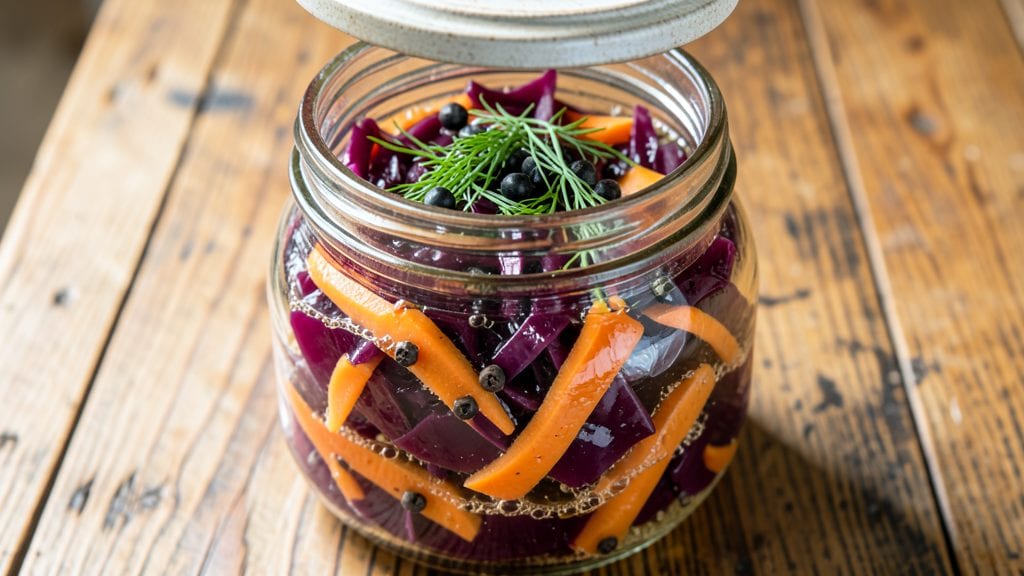
This fermented red cabbage recipe transforms a simple vegetable into a probiotic powerhouse that adds tangy crunch to any plate. The process is straightforward—just salt, shred, and let nature do the work—but the results are extraordinary. I’ve perfected this method over years of testing, ensuring safety and flavor every time.
What makes this recipe special is its versatility and health benefits. Fermented red cabbage is packed with gut-friendly probiotics, vitamin C, and fiber, making it a nutrient-dense addition to salads, sandwiches, or even as a standalone side.
The fermentation process takes about a week, but it’s hands-off once you get started.
The key to success lies in proper technique: using the right salt-to-cabbage ratio, keeping the cabbage submerged under brine, and storing it in an anaerobic environment to prevent mold. This method ensures vibrant color, crisp texture, and a tangy flavor that brightens any dish.
Once fermented, your red cabbage will stay fresh in the fridge for months, ready to elevate meals with its probiotic punch. Whether you’re a seasoned fermenter or trying it for the first time, this recipe delivers reliable, restaurant-quality results at home.
Ingredients for fermented red cabbage
Four simple ingredients transform humble red cabbage into a probiotic-rich crunch for salads and bowls.
| Ingredient | Amount | Notes |
|---|---|---|
| Red Cabbage 🥬 | 2 lb | Fresh, outer leaves removed |
| Non-Iodized Sea Salt 🧂 | ½ cup | Diamond Crystal preferred |
| Carrots 🥕 | 2 whole | Medium size, peeled |
| Fresh Dill 🌿 | ¼ cup | Chopped, stems removed |
| Fresh Juniper Berries 🌲 | 1 tbsp | Crushed, optional for depth |
| Black Peppercorns 🌶️ | 1 tsp | Coarsely cracked |
| Filtered Water 💧 | 2 cups | Chlorine-free preferred |
| Glass Mason Jar 🥫 | 1 quart-sized | With airtight lid |
| Small Fermentation Weight 🪨 | 1 piece | Ceramic or glass |
| Rubber Band 🎀 | 1 piece | For securing lid |
| Parchment Paper 📄 | 1 sheet | For packing cabbage |
The quality of your red cabbage is non-negotiable—seek out heads with vibrant purple leaves and firm texture. Local farmers markets often carry the freshest varieties, but any reputable grocery store will suffice. For the salt, Diamond Crystal kosher is ideal due to its coarse texture, which dissolves evenly without over-salting. If you can't find non-iodized sea salt, Morton kosher salt works in a pinch, though it may leave a slightly different mineral profile. The carrots add subtle sweetness and color contrast—choose organic if possible to avoid pesticide residues. Fresh dill and juniper berries elevate the flavor profile but can be omitted if unavailable; dried dill at one-third the amount is an acceptable substitute.
No glass mason jar? A sterilized quart-sized canning jar from Ball or Mason brand works perfectly. The fermentation weight can be substituted with a small glass bowl or even a bag of marbles, though ceramic weights are preferred for even pressure distribution. If you're short on time, pre-shredded cabbage from the produce section saves chopping time, though it may yield slightly less volume. For those avoiding gluten, ensure all equipment has been thoroughly cleaned to prevent contamination. The rubber band serves a critical function—it creates a slight seal to keep the lid in place while allowing gas to escape, which is essential for proper fermentation.
Store your fermented red cabbage in the darkest, coolest part of your fridge to maintain optimal conditions. It will develop its signature tang over 5-7 days, with full flavor maturation at 2-3 weeks. Once opened, keep submerged in the brine to preserve texture and probiotic activity. This recipe yields enough for 4-6 servings, with leftovers lasting 6-12 months when properly stored. Portion into airtight containers for meal prep—it pairs beautifully with hearty grains, roasted vegetables, and plant-based proteins.
Why You'll Love This Recipe
- No-Fuss Fermentation: I swear by this—just shred the cabbage, sprinkle salt, and let time do the work. No fancy equipment, no stressing over temperatures, and honestly, the kids can help with the chopping (they’ll love the dill bits).
- Juniper Magic Unlocked: That tiny juniper berry punch makes it taste like a cozy forest hike in your mouth. Sweet from the carrots, tangy from the ferment, and the dill keeps it bright—like a hug in bite form.
- Weeknight Sidekick: Slap this on sandwiches, toss it into grain bowls, or serve it alongside roasted meats. It’s my go-to for lazy nights when I don’t want to cook but still crave something that feels special.
- Budget-Friendly Staple: A single head of cabbage stretches for weeks, and the salt and spices cost pennies. I make a big batch and forget about it—until I’m opening the jar months later, still crisp and flavorful. (Yes, even on a Tuesday night.)
Step-by-step instructions for fermented red cabbage
Mastering this probiotic-rich ferment requires precision in technique and timing.
Prepare the Vegetables for Fermentation
Remove the outer leaves from the 2 lb red cabbage and discard any wilted or damaged sections. Quarter the cabbage lengthwise, keeping the core intact, then thinly slice each quarter into ¼-inch thick strips using a sharp knife. The goal is even, uniform slices that will pack tightly in your jar.
Peel the 2 whole carrots and cut them into ¼-inch thick matchsticks. Chop the 0.25 cup fresh dill, removing stems, and coarsely crack the 1 tsp black peppercorns using a mortar and pestle or rolling pin. Crush the 1 tbsp fresh juniper berries lightly between your palms to release their aromatic oils without pulverizing them completely.
Create the Brine and Pack the Mason Jar
In a large mixing bowl, combine the sliced red cabbage and carrot matchsticks. Sprinkle the 0.5 cup non-iodized sea salt evenly over the vegetables, massaging it into the cabbage with your hands for 2-3 minutes until the cabbage begins to soften and release liquid. This step is crucial for developing the proper texture and ensuring safe fermentation.
Place the 1 sheet parchment paper over the packed vegetables, pressing down gently to submerge everything beneath the liquid. Transfer the mixture to the 1 quart-sized glass mason jar, packing it tightly. Add the crushed juniper berries, cracked peppercorns, and chopped dill on top, then pour the 2 cups filtered water into the jar until the vegetables are completely submerged.
Secure and Initiate Fermentation
Place the 1 piece small fermentation weight on top of the vegetables to keep them submerged. Seal the jar with its airtight lid, leaving it slightly loose to allow gases to escape during the initial fermentation. Secure the lid with the 1 piece rubber band to prevent it from opening completely. Store the jar at room temperature, away from direct sunlight.
Ferment for 4-5 days at 68-72°F, checking daily for proper submergence. You'll notice bubbles forming and the liquid may become slightly cloudy—this indicates active fermentation. After 4 days, taste a small amount; it should be tangy but not overly sour. If it's to your liking, refrigerate to slow fermentation and preserve the flavor.
Store and Enjoy Your Fermented Red Cabbage
Once refrigerated, your fermented red cabbage will continue developing flavor over time. The texture should be crisp with a pleasant tanginess, and the color will deepen to a rich purple hue. This probiotic powerhouse keeps well in the refrigerator for up to 6 months, making it a versatile addition to salads, sandwiches, or as a side dish.
When ready to serve, remove the cabbage from the jar and discard the liquid or reserve it for dressings. The fermented vegetables will maintain their crunch and complex flavor profile, offering a probiotic boost to any meal. For best results, consume within 2 weeks of opening to maintain optimal freshness and probiotic benefits.
Pro Tips For Making Fermented Red Cabbage
- SHRED CABBAGE THIN: Thinner shreds = faster fermentation and better texture. A mandoline set to 2mm makes this easy—no more uneven chunks that take forever to soften. (Yes, it’s worth the splurge.)
- SALT IN LAYERS: Don’t dump all the salt at once—sprinkle between each layer of cabbage and carrots. This keeps the salt distributed evenly, prevents soggy spots, and makes sure every bite has that tangy punch.
- CRUSH JUNIPER BERRIES: Whole juniper berries just sit there like little rocks. Lightly crush them with a mortar and pestle or the bottom of a heavy pan before adding—they’ll release their piney magic into the brine instead of hiding in the jar.
- WEIGH DOWN HEAVY: A plate or fermentation weight isn’t enough—add a second weight (like a can of beans) to keep the cabbage fully submerged. Air exposure = mold. No one wants to redo this.
Health benefits of this fermented red cabbage
Gut Health Boost
Fermented red cabbage is a probiotic powerhouse, packed with live cultures that support your digestive system. Just ½ cup provides billions of beneficial bacteria, like Lactobacillus strains, which help balance gut flora and improve digestion. I’ve noticed my digestion improves noticeably after adding fermented cabbage to my meals regularly. 💪
Vitamin C Reserve
Unlike raw red cabbage, fermented versions retain and even concentrate vitamin C—a ¼ cup serving delivers about 30% of your daily needs. The fermentation process preserves this nutrient while enhancing its bioavailability. This makes it especially valuable during winter when colds are more common.
Fiber-Rich Crunch
With 4 grams of dietary fiber per ½ cup serving, this fermented cabbage supports regularity and heart health. The fiber content helps lower cholesterol by binding to bile acids in your digestive tract. I add it to salads to increase fiber intake without sacrificing flavor.
Antioxidant Protection
The fermentation process enhances the cabbage’s natural anthocyanins—powerful antioxidants that give it that vibrant purple color. These compounds help combat oxidative stress and inflammation. Studies show fermented vegetables have higher antioxidant activity than their raw counterparts.
Low-Calorie Nutrition
At just 25 calories per ½ cup serving, this fermented side delivers serious nutrition without the calories. It’s perfect for weight management while still providing satisfying texture and flavor. I often use it as a low-calorie topping for sandwiches and bowls.
Blood Sugar Support
The natural probiotics in fermented red cabbage help regulate blood sugar levels by improving insulin sensitivity. The fiber content also slows digestion, preventing blood sugar spikes. This makes it an excellent addition to meals for anyone monitoring glucose levels.
Nutrition facts
Frequently asked questions
Why does my fermented red cabbage smell strong after a few days?
A pungent aroma is normal during active fermentation—it means the good bacteria are working! If the smell becomes overly sour or rotten (like vinegar or ammonia), check for proper submergence and refrigerate immediately. This usually happens when air gets trapped or the salt ratio was off.
Can I use regular table salt instead of non-iodized sea salt?
No, table salt contains anti-caking agents (like aluminum) that can inhibit fermentation. Non-iodized sea salt is essential—it dissolves properly and contains the right mineral balance. If you must substitute, use Diamond Crystal kosher salt (it has a 2:1 ratio to table salt by volume).
How do I know when my fermented red cabbage is ready to eat?
After 4-5 days at room temperature, taste a small piece—it should be tangy but not overly sour. The texture should be crisp, not mushy. For deeper flavor, ferment 7-10 days before refrigerating. The color will darken to a rich purple as it matures.
What should I do if mold appears on top?
If you see fuzzy mold, it’s likely from exposure to air. Scoop off the moldy layer (and ½ inch below it) and press a clean fermentation weight back down. The cabbage below should be fine—just ensure everything stays submerged. Discard any moldy liquid.
Can I add other vegetables to this recipe?
Try adding ½ cup grated daikon radish or 1 thinly sliced apple for sweetness. Just ensure all veggies fit in your jar and stay submerged. Avoid high-water-content veggies like cucumbers, as they dilute the brine and may spoil faster.