
Breakfast & Brunch
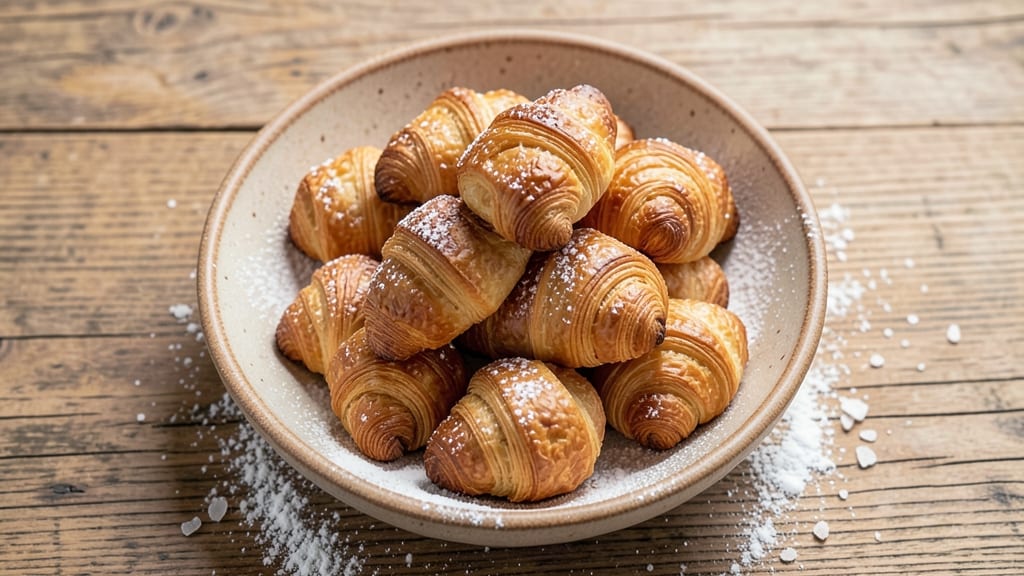
Creating mini croissants with layers so delicate they shatter like butter is an art I’ve perfected after years of testing—and a few failed batches that left me questioning my life choices.
Standing on a step stool in my grandmother’s kitchen in Sicily, I learned the secrets to that signature flakiness: patience, precision, and a proper lamination process. This recipe delivers bite-sized perfection with the same buttery, melt-in-your-mouth magic of traditional croissants, just scaled down for easier handling.
The key to flaky mini croissants lies in the dough: a high-fat butter content (40% of the flour weight) and careful layering through folding and chilling. We’ll work with a classic yeasted dough, shaped into uniform triangles, then proofed and baked until golden brown.
The result? A stack of mini croissants with crisp, caramelized edges and tender, pillowy layers—each bite a testament to the magic of French pastry technique.
What makes this recipe foolproof is the step-by-step method, from measuring ingredients by weight (for consistency) to shaping the dough into even triangles (for uniform baking). The egg wash ensures a golden finish, while a hot oven creates that signature crispness.
Whether you’re serving them for breakfast, brunch, or as a sweet snack, these mini croissants will disappear faster than you can say "butter."
Once you master the classic version, you can experiment with fillings like chocolate ganache or almond paste—but first, let’s focus on nailing that flaky texture. Here’s how to make them from scratch, step by step.
Ingredients for mini croissants
Twelve ingredients, twelve layers of perfection—this is your shortcut to restaurant-quality mini croissants.
| Ingredient | Amount | Notes |
|---|---|---|
| All-Purpose Flour 🌾 | 3 cups | Spooned and leveled, not packed |
| Unsalted Butter 🧈 | 1 ½ cups | Cold, cubed (80g/3oz per cup) |
| Granulated Sugar 🍚 | ½ cup | For dough enrichment |
| Active Dry Yeast 🍞 | ¼ oz | 1 packet (2.25 tsp) |
| Large Eggs 🥚 | 2 whole | Room temperature |
| Whole Milk 🥛 | ½ cup | Warmed to 110°F |
| Diamond Crystal Kosher Salt 🧂 | ½ tsp | For dough balance |
| Vanilla Extract 🌸 | 1 tsp | Pure, not imitation |
| Large Egg Yolks 🥚 | 2 whole | For egg wash |
| Heavy Cream 🥛 | ¼ cup | For brushing |
| Granulated Sugar 🍚 | 1 tbsp | For egg wash |
The butter is non-negotiable here—European-style unsalted (like Plugrá or Kerrygold) has 82% fat content, which is ideal. If you can only find regular butter, use 1.25 cups instead. Keep it cold when working with the dough—cold butter creates those signature flaky layers. King Arthur or Gold Medal flour works best for this recipe; avoid bread flour. The yeast should be fresh—if it’s past its expiration date, test it in warm milk first to ensure it’s active. I always grab mine from Whole Foods or Trader Joe’s for freshness.
No vanilla extract? Vanilla bean paste works beautifully, or even a scraped vanilla bean. Running short on heavy cream? Half-and-half plus a splash of milk gets you close. The egg wash is crucial—don’t skip it. For a richer finish, add a pinch of salt to the egg wash. If you’re making these ahead, you can prep the dough and refrigerate it for up to 24 hours before shaping. The sugar in the egg wash caramelizes during baking, giving those crisp edges. Pro tip: use a digital kitchen scale for precision—especially with the butter. Measuring by volume can lead to inconsistent results.
Once baked, these mini croissants are best served warm—they’ll lose their crispness as they cool. Store them in an airtight container at room temperature for 2-3 days. For longer storage, freeze the baked croissants (without the egg wash) for up to 1 month. To reheat, wrap them in a damp paper towel and warm in a 350°F oven for 5-7 minutes. The key to reheating is steam—it restores that melt-in-your-mouth texture. If you’re making a batch for a crowd, bake them in two rounds—they’ll keep warm in a 200°F oven for up to an hour.
Why You'll Love This Recipe
- Butter Layers Magic: I swear by that cold butter folded into the dough—it’s the secret to that perfect flaky, melt-in-your-mouth texture. No fancy tools, just patience and a rolling pin.
- Weeknight Hero: These come together in one dough, one rise, and zero stress. I’ve made them for breakfast, snacks, or even a last-minute charcuterie board—no one ever guesses they’re homemade.
- Leftovers That Shine: Freeze extras and reheat straight from frozen—crispy outside, tender inside. My kids grab them straight from the fridge for school lunches (yes, really).
- Budget-Friendly Luxury: A single egg and a stick of butter stretch to a dozen golden bites. Fancy pastries cost five times this much, but these? They’re my go-to for feeling special without breaking the bank.
Step-by-step instructions for mini croissants recipe
Here's how to create delicate, buttery layers that truly shatter like butter—every time.
Prepare the Dough and Cold Butter Block
In a large mixing bowl, combine the 3 cups all-purpose flour, 0.5 cup granulated sugar, and 0.5 tsp diamond crystal kosher salt. Whisk gently to distribute the sugar evenly through the flour—this prevents sweet pockets that can interfere with gluten development.
In a separate small bowl, dissolve the 0.25 oz active dry yeast in the 0.5 cup warmed whole milk (110°F). Let it sit for 5 minutes until foamy—this confirms the yeast is active. Add the yeast mixture to the flour along with the 1 tsp vanilla extract and mix until just combined. The dough will look shaggy at this stage.
Cut the 1.5 cups cold unsalted butter into ½-inch cubes and arrange them in a single layer on a sheet of plastic wrap. Fold the plastic over and pound gently with a rolling pin until you have a 1-inch thick rectangular block. Place this butter block between two more sheets of plastic wrap and refrigerate while you work.
Create the Laminated Dough
On a lightly floured surface, gather the dough into a rough rectangle and roll it out to 12x8 inches. Place the cold butter block in the center of the dough and fold the dough over it like an envelope, sealing the edges tightly. Roll the sealed package into a 12x8-inch rectangle again, keeping the sides parallel.
Fold the dough into thirds like a business letter (this is called a "letter fold"). Wrap tightly in plastic and refrigerate for 30 minutes. This first fold creates the foundation for those signature flaky layers. After chilling, repeat the rolling and folding process two more times, chilling the dough for 30 minutes between each fold. Each fold multiplies the butter layers exponentially, which is what gives croissants their signature shatter.
Shape and Proof the Mini Croissants
Divide the chilled dough into 12 equal pieces (about 1.5 oz each). Roll each piece into a 3-inch log and shape into a crescent by pinching the ends together. Arrange the croissants on a parchment-lined baking sheet, leaving 1 inch between each. Cover with a clean kitchen towel and let them rise at room temperature for 1 hour or until they've puffed about 50%. They should look slightly domed and feel spongy to the touch.
While the croissants proof, preheat your oven to 375°F. In a small bowl, whisk together the 2 whole large egg yolks and 0.25 cup heavy cream, then brush this mixture over the tops of the croissants. Sprinkle with the 1 tbsp granulated sugar for a subtle caramelized finish. This egg wash creates a beautiful golden crust while the sugar adds a delicate sweetness that complements the butter flavor.
Bake to Golden Perfection
Bake the croissants for 15-18 minutes until they're deep golden brown with crisp edges. The centers should still feel slightly soft—this ensures they remain tender inside while developing that signature flaky exterior. Rotate the baking sheet halfway through for even browning.
For the final touch, brush the warm croissants with a little more of the heavy cream mixed with 1 tablespoon melted butter (optional). Serve immediately while still warm, as they'll crisp up beautifully as they cool. Each bite should deliver that magical combination of crisp, flaky layers that melt in your mouth, with just a hint of sweetness from the sugar and vanilla.
Pro Tips For Making Mini Croissants
- Chill the Butter Hard: Take your unsalted butter out of the fridge and let it sit until it’s just pliable but still cool to the touch—about 15 minutes at room temp. I learned this the hard way: too soft, and your dough gets greasy and sticky; too cold, and it won’t incorporate smoothly. Think "firm but workable," like a block of clay that won’t crumble.
- Weigh Your Flour: Skip the scooping and use a kitchen scale for your all-purpose flour—1 cup packed isn’t the same as 1 cup loosely spooned. I used to eyeball it, and my mini croissants turned out either dense or too flaky. Weigh it to 120 grams (for a standard batch) and stop guessing.
- Proof Until Puffy: Don’t rush the first rise—your yeast needs time to do its job. Cover the dough with a damp towel and let it rise in a warm spot (like a turned-off oven with the light on) until it’s almost doubled, then punch it down. I was skeptical until I tried it: underproofed dough = sad, flat croissants.
- Roll Thin, Fold Tight: For the lamination, roll your dough thin—like a postcard—before folding. Too thick, and your butter pockets won’t melt evenly during baking, leaving you with dense mini croissants. And for the love of pastries, seal those edges tight when folding; no gaps, or your butter will escape and ruin the layers.
Dietary considerations for these flavors
Gluten-Free Adaptations
For a gluten-free version, replace the all-purpose flour with a 1:1 gluten-free flour blend like King Arthur Measure for Measure or Bob’s Red Mill 1-to-1. Add 1 teaspoon xanthan gum to help mimic gluten’s structure.
Keep the butter cold and use the same folding technique, but expect slightly denser results. Proof time may need adjustment—watch for 50% rise rather than relying on a timer. 🌾
Dairy-Free Options
Substitute the butter with vegan butter (like Miyoko’s) or coconut oil for a dairy-free version. Use unsweetened almond milk instead of whole milk and ensure your yeast is dissolved in warm liquid.
The texture will be slightly different, but still flaky. For the egg wash, use a mix of aquafaba (chickpea brine) and water. 🧈
Lower-Carb Versions
Reduce the sugar to 2 tablespoons and use almond flour or coconut flour for a lower-carb option. Add 1 extra egg white to help bind the dough.
Proof time may decrease, so monitor closely. These will be lighter but still buttery. For extra richness, brush with melted ghee instead of butter. 🥚
Allergen-Friendly Tips
Always check labels for hidden allergens—some gluten-free flours contain traces of dairy. For nut-free kitchens, use sunflower seed butter instead of almond paste in filled versions. Keep cross-contamination in mind by using separate utensils and surfaces. When in doubt, prepare these in a dedicated allergen-free space. ✨
Yeast-Free Option
For a quick yeast-free version, use baking powder (1 teaspoon) instead of yeast. Replace the milk with 1/4 cup melted butter plus 1/4 cup warm water. This version won’t rise as dramatically but will still be tender. Bake immediately after shaping—no proofing needed. 🍞
Nutrition facts
Frequently asked questions
Why do my mini croissants turn out dense instead of flaky?
The most common culprit is warm butter during lamination. Keep your butter block cold (not melting) and refrigerate between folds. Also, avoid overworking the dough—handle it gently when shaping to preserve those delicate butter layers.
Can I make mini croissants ahead of time?
Yes! Shape and proof the croissants, then refrigerate them overnight on a parchment-lined tray. The next morning, brush with egg wash and bake as directed. For longer storage, freeze shaped (unbaked) croissants for up to 1 month—thaw in the fridge before baking.
What's the best way to reheat mini croissants?
Wrap them in a damp paper towel and warm in a 350°F oven for 5-7 minutes. The steam restores their crispness. Never microwave—they'll turn rubbery. For extra flakiness, brush with melted butter after reheating.
Can I substitute regular butter for European-style butter?
Yes, but use 1.25 cups instead of 1.5 cups since regular butter has less fat. European-style butter (like Plugrá) has 82% fat content, which creates those signature flaky layers. If you must use regular butter, chill it longer before laminating.
How do I get even-sized mini croissants?
Use a digital kitchen scale to divide dough into 12 equal 1.5 oz pieces. Roll each piece into a 3-inch log before shaping. For consistency, keep your workspace chilled—warm surfaces make dough sticky and uneven.