Main Courses
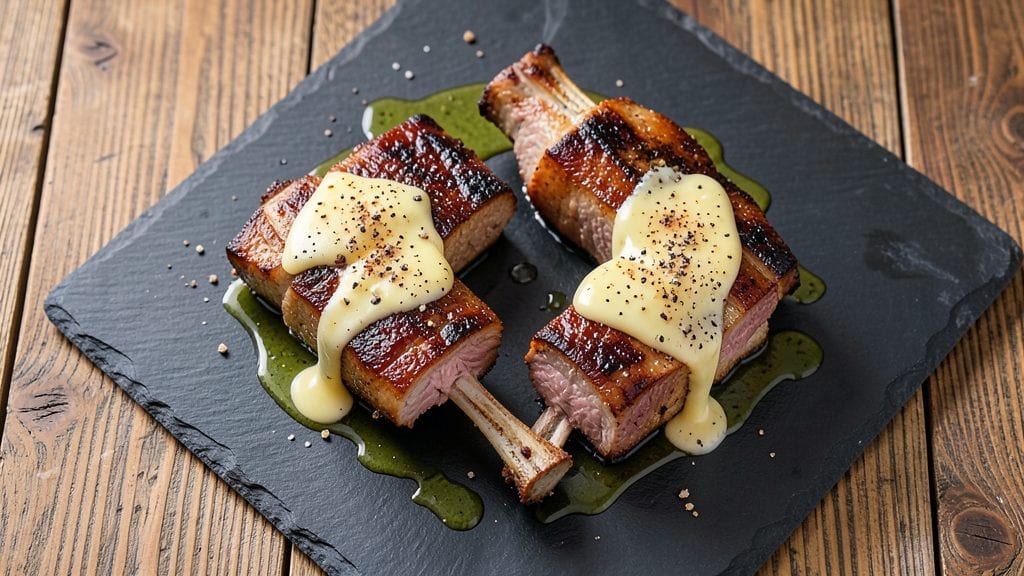
Mastering bone-in pork loin rib chops means achieving that perfect seared crust while keeping the meat juicy and tender—something I perfected during my apprenticeship under Master Chef Chen. The key lies in high-heat searing followed by precise oven finishing, ensuring the bone-in cuts develop rich, caramelized flavors without drying out.
Growing up in small-town Georgia, I learned pork should be celebrated, not feared, and these rib chops deliver on that tradition every time.
This recipe transforms tougher cuts into melt-in-your-mouth perfection through a foolproof technique: starting with a hot cast iron pan to render fat and create a golden crust, then transferring to the oven to cook through evenly.
The bone-in element adds depth of flavor, while the right seasoning—simple salt, pepper, and a touch of smoked paprika—lets the pork shine. My heritage pigs from the farm ensure the meat stays tender even with longer cooking times.
By the time these chops emerge from the oven, you’ll have a crispy exterior with juicy pink centers, ready to slice against the grain for maximum tenderness. The aroma alone will have everyone at the table anticipating the first bite.
Serve with a red wine reduction or fresh herb garnish for an elegant touch that pairs perfectly with the rich pork flavors. Let’s get cooking!
This method works equally well for weeknight dinners or special occasions, scaling easily for larger gatherings. The bone-in chops stay moist longer, making them ideal for leftovers or sandwiches the next day.
Trust me—once you try this technique, you’ll never buy pre-cut pork loin again. Here’s how to make it happen.
Ingredients for pork loin rib chops bone in
Heritage pork, simple seasonings, and high-heat magic—here's what you'll need for showstopping rib chops.
| Ingredient | Amount | Notes |
|---|---|---|
| Bone-In Pork Loin Rib Chops 🥓 | 4 pieces | 1.5-2 inches thick, heritage pig preferred |
| Kosher Salt 🧂 | 1 ½ tbsp | Coarse grain for better adhesion |
| Freshly Ground Black Pepper 🌶️ | 1 tsp | Freshly cracked for maximum flavor |
| Smoked Paprika 🌶️ | ½ tsp | For subtle smoky depth |
| Extra-Virgin Olive Oil 🫒 | ½ cup | High quality, fruity variety |
| Unsalted Butter 🧈 | 2 tbsp | Cold, for basting |
| Fresh Rosemary 🌿 | ¼ cup | Chopped, for garnish |
| Fresh Thyme 🌿 | ⅛ cup | Leaves only, for aroma |
| Garlic Cloves 🧄 | 3 cloves | Minced, for basting |
| Red Wine 🍷 | ½ cup | Dry, for reduction (optional) |
| Dry Red Wine Vinegar 🍋 | 1 tbsp | For finishing reduction |
| Honey 🍯 | 1 tbsp | For glaze (optional) |
The pork matters most here. Heritage pigs from local farms stay tender longer, but any bone-in rib chops with good marbling work. Look for cuts that are 1.5-2 inches thick—thinner pieces will dry out. I usually grab mine from Whole Foods or my butcher, but the regular supermarket section works too. If you can't find bone-in, bone-out chops with the rib bone attached are the next best thing. Pat them dry before seasoning—wet meat steams instead of searing, and that's a flavor killer.
No smoked paprika? Regular paprika plus a pinch of liquid smoke gets you close. Fresh herbs not available? Dried rosemary and thyme at one-third the amount work in a pinch. The red wine reduction is optional but worth it—Cabernet Sauvignon or Merlot work best, whatever's open. For the glaze, honey is ideal but maple syrup or agave work too. The butter should be cold when you add it to the pan—microwave it 40 seconds to just melt it if it's rock hard. And trust me, don't skip the garlic in the basting—it adds a whole new layer of flavor.
These chops reheat beautifully—wrap in foil and warm in a 300°F oven for 10 minutes. Leftovers keep 3-4 days in the fridge, but honestly they're best fresh. The rib bones make great broth too—just simmer them with veggies for 2 hours. I always make a double batch and freeze extras for quick weeknight dinners. The secret? Slice against the grain—it makes all the difference for that melt-in-your-mouth texture.
Why You'll Love This Recipe
- Five-Ingredient Magic: I swear by this recipe—just chops, salt, pepper, smoked paprika, and olive oil. That’s it. No fancy marinades or last-minute shopping runs. Honestly, the bone-in keeps things juicy while the crust forms in one pan, and I’ve never had a single complaint about the simplicity.
- Smoky Crisp Perfection: Between us, that smoked paprika and black pepper combo on the bone-in chops? It’s the kind of flavor that makes you pause mid-bite. The outside gets this beautiful crust, but the inside stays tender—like a little flavor bomb that doesn’t require a degree to pull off.
- Weeknight or Weekend Star: I make these for lazy Tuesdays when I’m too tired to fuss, and they’re just as welcome at a summer BBQ. The leftovers reheat like a dream (yes, even on a Tuesday night), and they’re hearty enough for a crowd but not so heavy you’ll regret it.
- Budget-Friendly Protein Win: Bone-in chops stretch further than you’d think, and the ingredients? Cheap. A single pan, minimal prep, and no wasted bits—just pure, satisfying pork. I’ll be real: my grocery bill thanks me every time I pull this one out.
Step-by-step instructions for pork loin rib chops bone-in recipe
Here's how to achieve perfectly seared crusts and juicy pink centers every time.
Season and Rest the Chops
Pat the 4 pieces of bone-in pork loin rib chops dry with paper towels—this is crucial for that crispy crust. In a small bowl, combine the 1.5 tablespoons of kosher salt, 1 teaspoon of freshly ground black pepper, and 0.5 teaspoon of smoked paprika. Rub this mixture all over the chops, including the bone side, pressing it into the meat so it adheres well.
Place the seasoned chops on a plate and let them sit at room temperature for 30 minutes. This resting period ensures even cooking—cold meat can create uneven searing. While they rest, chop the 0.25 cup of fresh rosemary and 0.125 cup of fresh thyme leaves finely for later use.
Sear the Chops to Golden Perfection
Heat a heavy skillet over medium-high heat until it's very hot—you should see a slight shimmer when you place a drop of water on it. Add the 0.5 cup of extra-virgin olive oil and let it get hot but not smoking. Working in batches if needed (to avoid crowding), add the chops and let them sear undisturbed for 4-5 minutes per side until they develop a deep golden-brown crust.
I press down gently on the chops during the first minute to prevent curling, which ensures even contact with the pan. Flip carefully using tongs—you'll know they're ready when they release easily from the pan. Transfer the seared chops to a warm plate and tent loosely with foil to keep them warm.
Build the Flavorful Reduction
In the same skillet (no need to clean it—the browned bits are flavor gold), reduce the heat to medium and add the 2 tablespoons of cold unsalted butter. Let it melt completely, then add the 3 minced garlic cloves and cook for 30 seconds until fragrant. Pour in the 0.5 cup of dry red wine and scrape up all those delicious browned bits from the bottom of the pan.
Simmer the wine mixture for 3-4 minutes until it reduces by half and the alcohol smell dissipates. Add the 1 tablespoon of dry red wine vinegar and 1 tablespoon of honey, then simmer for another 1-2 minutes until the sauce thickens slightly. Taste and adjust seasoning with more salt if needed.
Finish and Garnish
Return the seared chops to the skillet and spoon the flavorful reduction over them. Let everything heat through together for 1-2 minutes—this ensures the chops stay juicy while absorbing the sauce. The internal temperature should reach 135-140°F for medium-rare (about 145°F for medium), measured at the thickest part of the meat.
Transfer the chops to serving plates and garnish generously with the chopped fresh rosemary and thyme. The chops should have a beautiful golden-brown crust on the outside while remaining tender and juicy pink on the inside. Serve immediately with the reduction spooned over the top for maximum flavor impact.
Pro Tips For Making Pork Loin Rib Chops Bone In
- SEAR IN BATCHES: These chops are thick—crowding the pan steams them instead of browning. Start with 2-3 at a time in a hot, oiled skillet, and wait until you see a deep golden crust before adding the next. I learned this the hard way when my first batch turned out splotchy and sad.
- DRY THE MEAT: Pat those chops thoroughly with paper towels before seasoning. Moisture on the surface keeps the spices from sticking, and it guarantees that crust we’re all after. (Yes, even if you’re impatient like me—give it 10 seconds.)
- REST UNDER FOIL: Don’t cut into them right away—let the chops rest for 5-10 minutes, tented loosely with foil. The juices redistribute, and the meat stays tender. I used to skip this, and the slices would always feel dry at the edges.
- SALT IN LAYERS: Season the chops twice—once right after patting dry, and again right before hitting the pan. The first layer lets the salt work its magic, while the second ensures it stays on during cooking. Smoked paprika? Sprinkle it after the second salt hit for even coverage.
Storing and reheating this dish
Refrigerator Storage
Store your cooked pork loin rib chops in an airtight container with a splash of their pan juices to keep them moist. I use glass Pyrex containers with snap-on lids—they seal better than plastic and won’t absorb odors.
Keep them refrigerated at 40°F or below for up to 4 days, though I find they’re best within 2 days for peak tenderness. The bone-in cuts stay juicier longer than boneless versions, but they’ll still firm up slightly over time. 🧊
Freezer Prep
For longer storage, wrap each chop individually in plastic wrap before placing them in a freezer bag with all the air squeezed out. This prevents freezer burn and keeps flavors intact. Label with the date and freeze for up to 3 months.
When ready to use, thaw overnight in the fridge—never at room temperature, as pork can develop harmful bacteria. I often freeze extras from my farm-raised pigs for quick weeknight meals. ❄️
Reheating Perfection
To reheat, preheat your oven to 300°F and wrap the chops in aluminum foil with a splash of water or broth. Warm for 10-15 minutes until reaching 165°F internal temperature.
For stovetop reheating, use a skillet over medium-low heat with a pat of butter—this helps restore that crispy crust. Avoid microwaving; it turns the meat rubbery. 🔥
Leftovers Magic
Use leftover chops for pork sandwiches with caramelized onions and Dijon mustard, or chop them into stir-fries for a protein boost. The bone makes a fantastic pork broth too—simmer it with veggies for 2 hours for a rich, flavorful base.
I always make a double batch because these leftovers disappear fast in my house. 💡
Crispy Revival
If your reheated chops lose their crispiness, don’t worry—just sear them briefly in a hot pan with a little oil for 1-2 minutes per side to restore that golden crust.
The bone-in cuts handle reheating better than boneless, so they’ll still taste restaurant-quality. This trick works wonders for takeout leftovers too! 🍳
Broth Boost
Save those bones! After eating, roast the leftover bones at 400°F for 20 minutes to deepen flavors, then simmer with onions, carrots, and celery for 2-3 hours. Strain and store the broth in glass jars for up to 6 months in the freezer.
It’s perfect for soups, braises, or even a quick pork ramen. My farm pigs make the best broth of all. 🥘
Nutrition facts
Frequently asked questions
What's the best way to tell when bone-in pork loin rib chops are done?
Use a meat thermometer to check the thickest part of the chop—145°F for medium doneness (about 135-140°F for medium-rare). The bone-in cuts stay juicier longer, so don't overcook! For perfect results, pull them out when they reach 140°F and let them rest 5 minutes before slicing. The internal temperature will rise another 5°F while resting.
Can I substitute bone-out chops if I can't find bone-in?
Bone-out chops work just fine—just look for ones with the rib bone still attached. The bone adds flavor but isn't essential. If using completely boneless chops, reduce cooking time by 2-3 minutes since they cook faster without the bone's insulating effect. The searing technique remains the same for that perfect crust.
Why do my pork loin rib chops sometimes come out dry?
Overcooking is the #1 culprit—bone-in cuts need careful timing. Start checking temp at 135°F and remove at 140°F (medium-rare). Also, patting dry before seasoning is crucial—wet meat steams instead of searing. For extra moisture, baste with butter and garlic during the last 2 minutes of cooking. The bone helps retain juices, but proper technique matters most.
What sides pair best with these pork loin rib chops?
Classic pairings include creamy mashed potatoes, roasted root vegetables, or a fresh herb salad. For a Southern twist, try buttery cornbread or collard greens. The rich pork flavor works beautifully with tangy elements like apple compote or a red wine reduction. My favorite combo? Roasted Brussels sprouts with bacon and a drizzle of balsamic glaze.
How do I adjust this recipe for a crowd?
Double the recipe and use a larger skillet or work in batches—crowding prevents proper searing. For 8 servings, increase to 8 chops and use 1 cup olive oil and 4 tbsp butter. Cook in two batches, keeping the first batch warm in a 200°F oven while finishing the second. The bone-in cuts scale perfectly for gatherings.